

Knee Replacement Surgery: What to Expect, Recovery, and Costs
Knee pain that wakes you at night, stops you on stairs, and hasn’t shifted after months of injections is not something to accept as permanent. Knee replacement surgery resolves that pain for over 90% of patients — and the quality of that experience, from implant choice to rehabilitation structure, depends heavily on where it is done.
Key Takeaways
- Knee replacement surgery (knee arthroplasty) replaces damaged knee joint surfaces with metal and polyethylene implants — total or partial depending on the extent of damage.
- Recovery takes 6–12 weeks to return to daily activity; full return to sport typically occurs by 12 months.
- KCM Clinic uses Zimmer Biomet and Johnson & Johnson implants — the same brands deployed in NHS and major Western European orthopaedic centres — with 3D laparoscopic surgical technology.
- UK and Canadian patients avoid waiting lists extending beyond 18 months; KCM schedules consult-to-surgery in 7–14 days.
- KCM’s all-inclusive package covers pre-operative assessment, surgery, hospital stay, physiotherapy, dietetics, psychology support, and 12-month aftercare.
Contents
- What Is Knee Replacement Surgery?
- When Do You Need Knee Replacement Surgery?
- How Is Knee Replacement Surgery Performed?
- What Implants Are Used in Knee Replacement Surgery?
- How Much Does Knee Replacement Surgery Cost in the UK?
- How Long Is the Recovery After Knee Replacement Surgery?
- All-Inclusive Packages and Aftercare
- What Are the Success Rates for Knee Replacement Surgery?
- What Are the Risks of Knee Replacement Surgery?
- Can You Walk Normally After Knee Replacement Surgery?
- Frequently Asked Questions
What Is Knee Replacement Surgery?
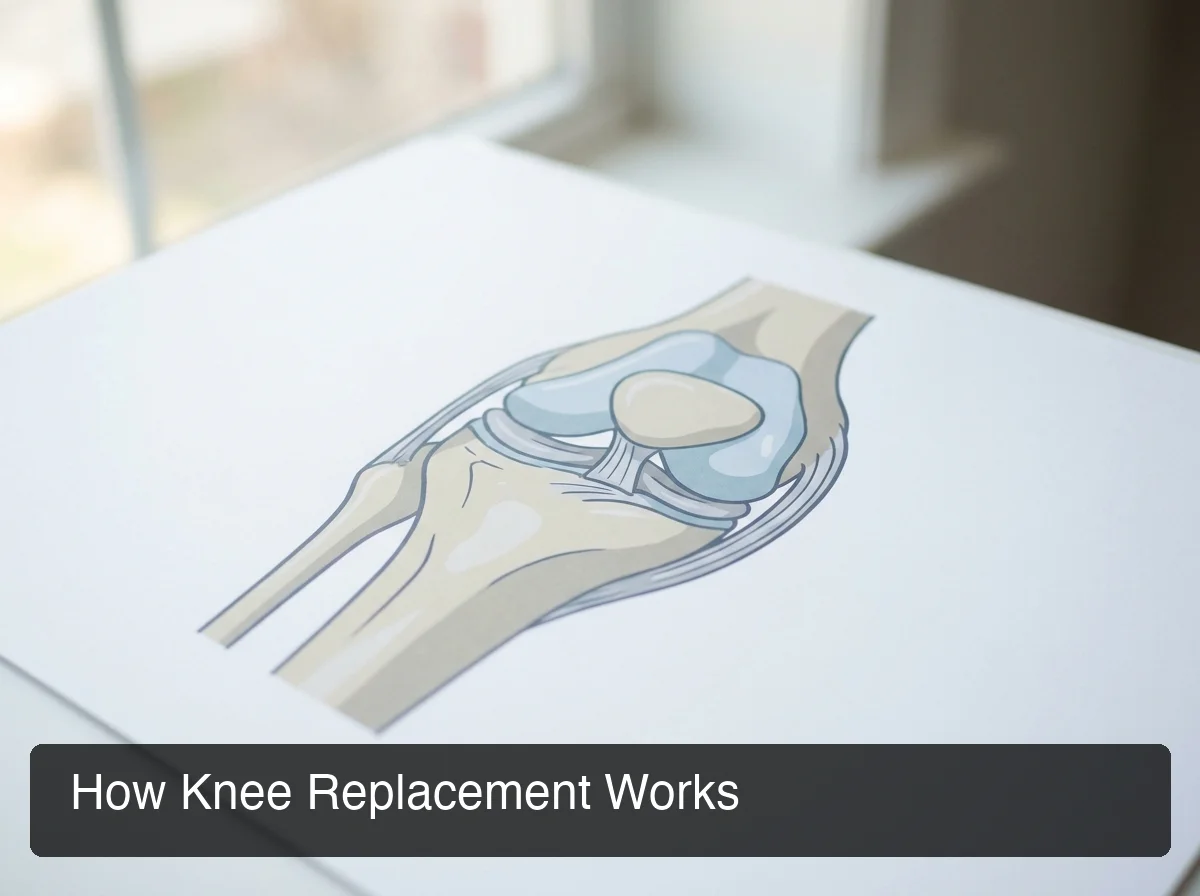
Knee replacement surgery — clinically called knee arthroplasty — removes the damaged bone and cartilage surfaces of the knee joint and replaces them with metal and polyethylene components. The result is a smooth, functional joint that no longer grinds or catches. Total knee replacement resurfaces all three compartments; partial (unicompartmental) replacement addresses only the one compartment that has deteriorated.
The knee joint has three compartments: medial (inner), lateral (outer), and patellofemoral (the kneecap surface). Osteoarthritis is the most common reason all three require replacement; rheumatoid arthritis and post-traumatic damage are also frequent indications.
Today’s implants — cobalt-chromium alloy femoral components, titanium tibial baseplates, and cross-linked polyethylene spacers — are engineered for load-bearing longevity with more than 30 years of implanted-patient data behind them.
Not every knee problem requires total replacement. Patients with isolated single-compartment damage may be candidates for partial knee replacement, a less invasive option with a shorter recovery. Your surgeon determines which approach fits your imaging and functional goals.
When Do You Need Knee Replacement Surgery?
Knee replacement surgery is considered when knee pain substantially limits daily function and conservative treatment — physiotherapy, weight management, anti-inflammatory medication, corticosteroid injections — has failed to provide adequate long-term relief. The primary indication is severe osteoarthritis; rheumatoid arthritis and post-traumatic joint damage are also common.
Your surgeon will typically recommend knee replacement when:
- Pain persists at rest or at night, not only during weight-bearing movement
- Range of motion is restricted to the point of disability
- Imaging confirms severe joint-space narrowing, deformity, or bone-on-bone contact
- Conservative management has been attempted for at least three to six months without adequate response
- Daily activities — climbing stairs, dressing independently, walking for 15 minutes — are substantially impaired
Age is not an exclusion criterion. Surgeons increasingly operate on patients in their fifties when functional decline is severe, particularly given newer implant platforms designed for higher-activity patients.
Worth knowing: The decision to proceed is primarily a quality-of-life threshold, not solely a radiological one. Two patients with identical X-rays can experience entirely different levels of functional pain — your lived experience carries clinical weight alongside the scan.
How Is Knee Replacement Surgery Performed?
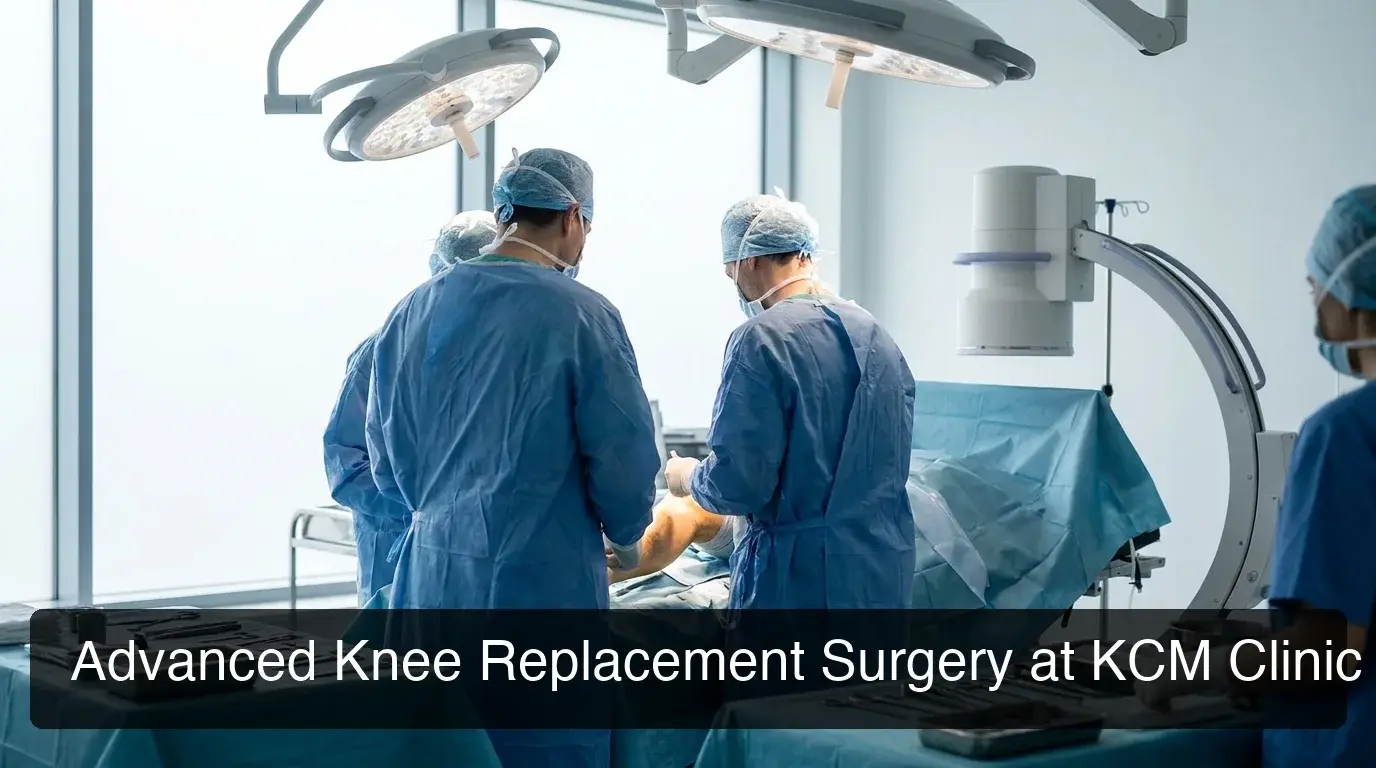
Total knee replacement takes 1–2 hours under general or spinal anaesthesia. The surgeon removes the damaged surfaces of the femur, tibia, and patella, then positions metal components fixed to the prepared bone. A polyethylene spacer between the metal components recreates the smooth gliding motion of healthy cartilage.
The procedure step by step:
- Anaesthesia — General anaesthesia or spinal block. A tourniquet is applied to minimise blood loss.
- Incision — A single anterior incision exposes the knee. Minimally invasive techniques avoid cutting through the quadriceps tendon.
- Bone preparation — Damaged bone and cartilage are removed using precision guides aligned to the patient’s anatomy.
- Fixation — Components are secured with cement (acrylic bone cement) or press-fit cementless fixation, depending on bone quality and patient age.
- Closure — The wound is irrigated, closed in layers, and dressed.
At KCM Clinic, the procedure uses 3D laparoscopic technology — giving surgeons enhanced depth perception and spatial precision over standard 2D magnification. This is not routine equipment across European orthopaedic centres; at KCM it is standard.
What Implants Are Used in Knee Replacement Surgery?
Premium knee implants use cobalt-chromium femoral components, titanium tibial baseplates, and ultra-high-molecular-weight polyethylene spacers. The two fixation methods — cemented and cementless — produce equivalent long-term outcomes in appropriately selected patients, with implant survivorship above 90% at 15 years for leading platforms.
KCM Clinic uses Zimmer Biomet and Johnson & Johnson (DePuy Synthes) platforms — the same brands found in NHS hospitals, private hospitals in Germany, and orthopaedic centres in Canada, with decades of published survivorship data.
Cemented vs. Cementless Fixation
| Feature | Cemented | Cementless |
|---|---|---|
| Fixation method | Acrylic bone cement bonds implant to bone | Press-fit; bone grows into porous titanium coating |
| Initial stability | Immediate and high | Lower initially; strengthens as bone integrates |
| Best candidate | Older patients, softer bone, revision cases | Younger, active patients with good bone quality |
| Long-term data | 30+ years of published registry data | Strong at 15+ years; evidence base expanding |
| Typical revision rate | Under 3% at 15 years | Comparable at 15 years |
Both configurations are available at KCM within the same implant platforms. Your surgeon selects based on bone density, age, and activity level — not on institutional default.
How Much Does Knee Replacement Surgery Cost in the UK?
Private knee replacement surgery in the UK typically costs between £12,000 and £18,000 at established private hospitals. This covers surgery and the hospital stay, but anaesthetist fees, physiotherapy, and follow-up are often invoiced separately. NHS patients receive the same surgery without personal cost — but wait times for elective orthopaedic procedures regularly extend beyond 18 months.
For many UK and Canadian self-funders, the real cost of waiting is not financial. Months of worsening function mean muscle atrophy, reduced cardiovascular fitness, and increasing fall risk — all of which complicate surgical outcomes. Patients who wait beyond the clinical threshold show measurably worse results at 12 months post-operation.
By the numbers: NHS England consistently lists orthopaedic surgery among the longest-wait specialties for elective procedures. Across Canadian provinces, average wait times for elective joint replacement run 12–28 months.
KCM Clinic’s all-inclusive packages eliminate itemised billing. One price covers the full pathway — pre-operative assessment, surgery, hospital stay, physiotherapy, dietetics, and 12-month follow-up. No separate invoice arrives after you return home; exact pricing is confirmed through KCM’s international patient team at kcmclinic.com.
How Long Is the Recovery After Knee Replacement Surgery?
Knee replacement recovery follows a predictable staged timeline: hospital discharge within 3–5 days, return to light daily activity at 4–6 weeks, and full functional return — including most recreational sport — by 12 months. The most significant improvement in pain and mobility occurs within the first three months.
Recovery milestones in practice:
- Days 1–3 (hospital): Walking with a frame begins on day one. Physiotherapy starts immediately — quad sets, heel slides, and range-of-motion work before discharge.
- Weeks 1–6: Crutches support movement for the first two weeks; most patients are walking independently outdoors by week six. Swelling peaks at week two — expected and manageable.
- Months 2–3: Driving returns at six to eight weeks for an automatic gearbox. Desk work and light occupational activity resume.
- Months 3–6: Swimming and cycling are introduced. Residual stiffness resolves; gait normalises progressively.
- Months 6–12: Golf, hiking, doubles tennis, and moderate recreational sport. Full implant settling and functional return.

All-Inclusive Packages and Aftercare
For patients travelling from the UK or Canada, the greatest source of anxiety about surgery abroad is not the procedure — it is the uncertainty of cost once back home. KCM’s all-inclusive model removes that variable entirely.
KCM Clinic’s knee replacement package covers:
- Pre-operative blood screening and clinical assessment
- Surgeon, anaesthetist, and hospital stay (three to five nights)
- In-hospital physiotherapy and a 12-month structured rehabilitation programme
- Dietetics and psychology support — standard inclusions, not optional add-ons
- 12-month aftercare: follow-up appointments, imaging review, and GP correspondence
The international patient team coordinates entirely in English and German. Consult-to-surgery scheduling runs 7–14 days for most patients — not because corners are cut, but because the booking system functions.
KCM Clinic offers the same all-inclusive model across bariatric, orthopaedic, spine, and cosmetic specialties. See our guide to gastric sleeve surgery for another example of how this structure removes post-recovery uncertainty for patients from abroad.
What Are the Success Rates for Knee Replacement Surgery?
More than 90% of patients report significant or complete pain relief at 10 years after total knee replacement. National joint registries in the UK and Australia show implant survivorship above 90% at 15 years. Revision surgery is required in under 3% of cases at 15 years with modern cemented or cementless platforms.
These figures come from the UK National Joint Registry and Australian Orthopaedic Association National Joint Replacement Registry — both reflecting outcomes with the same Zimmer Biomet and Johnson & Johnson implant families used at KCM Clinic.

Patient-reported outcomes from large multicentre studies consistently show:
- Pain scores fall 70–80% within six months of surgery
- Functional ability improves significantly for stair climbing, walking, and getting in and out of vehicles
The strongest predictors of a good outcome are bone quality, implant selection, surgical alignment, and adherence to post-operative physiotherapy — all addressed within KCM’s clinical protocol.
Common mistake: Waiting past the clinical threshold — hoping the knee will stabilise — is associated with measurably worse outcomes at 12 months. Muscle atrophy and neuromuscular deconditioning accumulate during delays and are harder to reverse after surgery.
What Are the Risks of Knee Replacement Surgery?
All surgery carries risk. For total knee replacement, the principal risks are deep vein thrombosis (DVT), surgical site infection, and implant-related complications such as stiffness or aseptic loosening. With modern anaesthetic protocols, anticoagulation prophylaxis, and aseptic technique, serious complications occur in under 2% of cases at specialist centres.
Published risk figures from registry and clinical data:
- Infection — deep surgical site infection in 0.5–1% of cases; risk increases with diabetes, elevated BMI, or immunosuppression
- DVT / pulmonary embolism — anticoagulation and compression stockings reduce clinically significant clots to under 1%
- Stiffness / limited range of motion — affects 1–2% of patients; almost always resolved with targeted physiotherapy
- Aseptic loosening — below 3% at 15 years with modern implant platforms
Before agreeing to surgery, your KCM surgeon reviews your full risk profile: BMI, diabetes control, cardiac status, smoking history. Several factors can be meaningfully reduced with pre-operative optimisation.
Knee injuries involving the ligaments rather than the joint surfaces — ACL tears, for example — follow a different treatment pathway. See our forthcoming guide to ACL surgery options for athletes and active patients navigating that decision.
Can You Walk Normally After Knee Replacement Surgery?
Most patients walk without a limp and without aids by three months after knee replacement surgery. A slightly altered gait is normal in the first six weeks as the neuromuscular system adapts to the new joint geometry. By six months, most patients move in a way that others would not recognise as post-surgical.
Daily walking targets are central to post-operative rehabilitation:
- Week 2: Short indoor walks, building to 10–15 minutes twice daily
- Week 6: 20–30 minute outdoor walks on level ground, unaided
- Month 3: 45–60 minute walks; stairs fully functional
- Month 6: Extended walking, light hiking, shopping without limitation
Running on hard surfaces is generally not recommended long-term because of cumulative impact load on the polyethylene spacer. Most surgeons advise favouring cycling, swimming, or elliptical training.
Book Your Knee Replacement Consultation at KCM Clinic
Knee replacement surgery delivers durable pain relief for patients who have exhausted conservative treatment. At KCM Clinic, the procedure is performed using Zimmer Biomet and Johnson & Johnson implants with 3D laparoscopic technology — and recovery is supported through a structured all-inclusive programme built for patients who have travelled internationally.
Book a Free Consultation with KCM Clinic
Not ready to book yet? Explore KCM Clinic’s full surgical programmes — procedure overviews, surgeon profiles, and international patient resources.
Frequently Asked Questions
How long does it take to recover from a knee replacement?
Most patients walk without aids by six weeks and drive by eight weeks. The majority return to full daily activity within three months, and complete recovery — including return to recreational sport — takes 9–12 months.
What is the most commonly reported problem after knee replacement surgery?
Stiffness is the most frequently reported issue in the first three months, affecting roughly 10–15% of patients noticeably. Persistent swelling is also common and typically resolves by month three. Both respond well to consistent physiotherapy.
What should I avoid after total knee replacement surgery?
Avoid high-impact activity such as running and jumping for at least 12 months. Do not cross your legs or sit in very low chairs during the first six weeks, as both positions stress the new joint capsule. Avoid prolonged immobility: short walks throughout the day reduce DVT risk.
Does KCM Clinic use named-brand implants for knee replacement?
KCM Clinic uses Zimmer Biomet and Johnson & Johnson (DePuy Synthes) implant platforms — the same device families deployed in NHS hospitals and major orthopaedic centres across Western Europe. Both brands publish survivorship data showing implant durability exceeding 90% at 15 years.
What does KCM Clinic’s all-inclusive knee replacement package include?
The package covers pre-operative blood screening, the surgical procedure including anaesthesia, a hospital stay of three to five nights, in-hospital physiotherapy, dietetics and psychology support, and 12 months of structured follow-up care. There are no separate itemised charges for anaesthesia or follow-up appointments.
Can UK patients have knee replacement surgery at KCM Clinic?
UK patients can book knee replacement at KCM Clinic in Jelenia Góra, Poland, with consult-to-surgery scheduling of 7–14 days. KCM operates under EU medical regulations — the same framework governing hospitals in Germany and Sweden — and the international patient team coordinates entirely in English.