

Gastric Sleeve Surgery: Procedure, Recovery, and Long-Term Results
Gastric sleeve surgery removes approximately 75–80% of the stomach, leaving a narrow, tube-shaped pouch that limits food intake and substantially reduces ghrelin — the hormone most responsible for hunger. The result is a body that is physiologically less hungry, not simply one being denied food by willpower. Sleeve gastrectomy now accounts for more than 60% of all bariatric procedures performed globally, making it the most commonly chosen weight-loss surgery worldwide.
What Is Gastric Sleeve Surgery and How Does It Work?
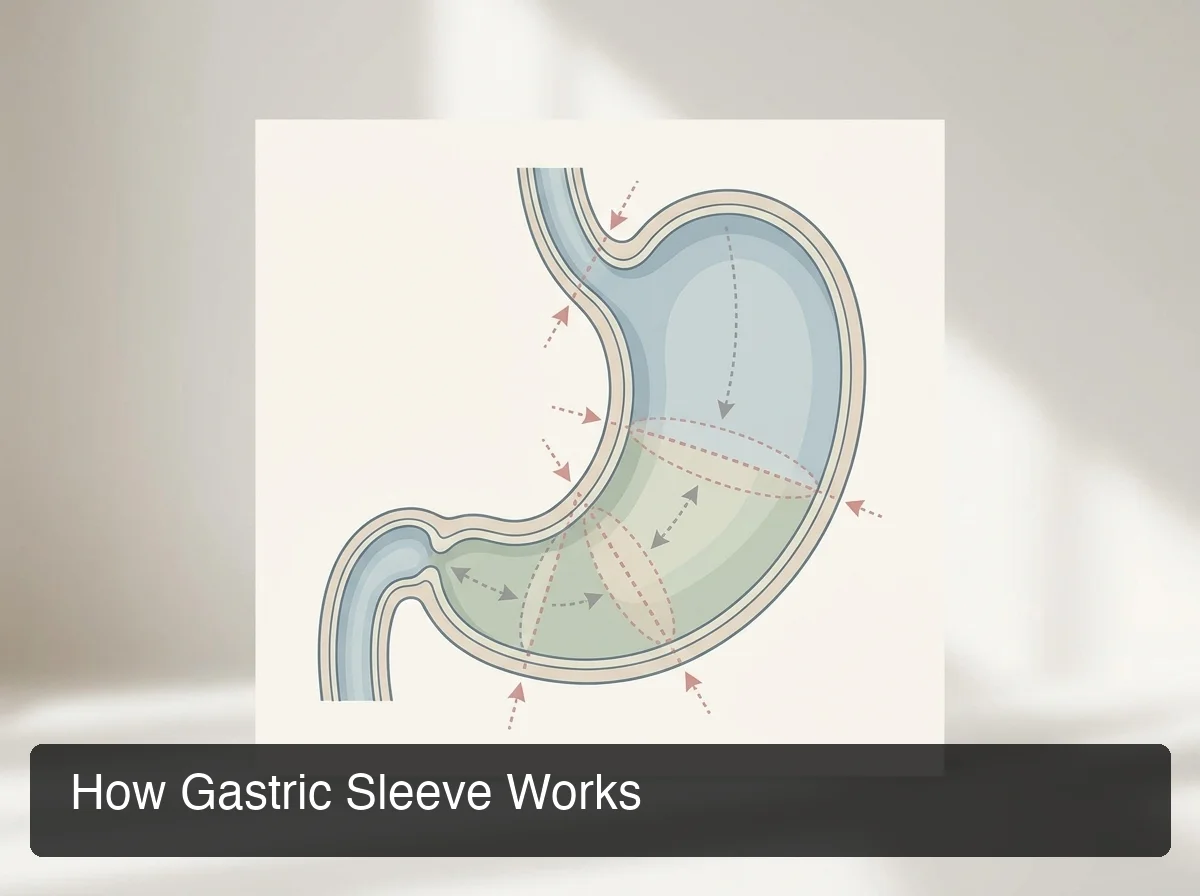
Gastric sleeve surgery removes 75–80% of the stomach via laparoscopic incisions, leaving a banana-shaped sleeve roughly the size of a small banana. The removed section includes most of the fundus — the primary site of ghrelin production — dramatically reducing hunger signalling. The remaining stomach functions normally; no part of the digestive tract is bypassed or rerouted.
The procedure is performed under general anaesthesia, typically taking 60–90 minutes. A bariatric surgeon makes three to five small incisions and uses laparoscopic instruments to divide and remove the larger, curved portion of the stomach. The remaining sleeve is sealed with surgical staples and tested for leaks before the patient moves to recovery.
At specialist centres, 3D laparoscopic imaging adds a precision layer to the staple line — the most technically critical variable in reducing post-operative complication risk. At KCM Clinic, this technology is standard rather than optional, alongside Johnson & Johnson surgical instruments of the same specification used at major Western European centres.
Because the intestines remain fully intact, nutrient absorption is largely unaffected. This distinguishes sleeve gastrectomy from malabsorptive procedures such as gastric bypass and reduces the long-term supplementation burden considerably.
Why Ghrelin Reduction Makes This Different From Dieting
The fundus removed during sleeve gastrectomy is the primary manufacturing site for ghrelin, the appetite-stimulating hormone that surges with caloric restriction on standard diets. Patients often describe the post-operative experience not as perpetual hunger being resisted, but as hunger arriving less frequently and subsiding much faster. That biological shift is what separates gastric sleeve from diet alone — and from most patients’ previous experiences of failed weight management.
Key Takeaways
- Gastric sleeve surgery removes 75–80% of the stomach, reducing both physical capacity and ghrelin production for sustained appetite suppression.
- Most patients lose 50–70% of their excess body weight within 12–18 months of surgery.
- Recovery to light activity typically takes 2–4 weeks; a graduated 6–8 week dietary protocol returns most patients to solid foods by the second month.
- Unlike gastric bypass, gastric sleeve leaves the intestines intact, reducing long-term nutritional deficiency risk while maintaining high weight-loss efficacy.
- KCM Clinic’s all-inclusive bariatric programme bundles surgery, hospital stay, dietetics, psychology, physiotherapy, and aftercare — addressing the full picture of sustainable long-term results.
Contents
- What Is Gastric Sleeve Surgery and How Does It Work?
- Who Is a Good Candidate for Gastric Sleeve Surgery?
- How Much Weight Can You Lose After Gastric Sleeve Surgery?
- What Are the Risks and Complications of Gastric Sleeve Surgery?
- What Is the Recovery Timeline After Gastric Sleeve Surgery?
- Gastric Sleeve vs. Gastric Bypass: Which Is Right for You?
- How Much Does Gastric Sleeve Surgery Cost in Europe?
- Why Choose KCM Clinic for Gastric Sleeve Surgery?
- Frequently Asked Questions
Who Is a Good Candidate for Gastric Sleeve Surgery?
Gastric sleeve surgery is indicated for adults with a BMI of 35 or above plus at least one obesity-related health condition — such as type 2 diabetes, hypertension, or obstructive sleep apnoea — or a BMI of 40 or above without additional conditions. Previous non-surgical weight management attempts are required before surgical candidacy is confirmed.
Pre-operative evaluation covers medical history, cardiac fitness, nutritional baseline, and psychological readiness. Severe gastro-oesophageal reflux disease (GERD) or Barrett’s oesophagus are typically contraindications; those patients are generally directed toward gastric bypass instead, as sleeve gastrectomy can worsen reflux in susceptible individuals. Most centres operate within an age range of 18–65, adjusted for individual health profile.
For UK patients, NHS bariatric waiting lists commonly extend well beyond 12–18 months for eligible candidates. Private surgery within the UK is accessible but carries a significant cost premium for self-funders. EU-based centres operating under the same hospital accreditation and surgeon credentialing framework as Germany provide clinical equivalence at considerably shorter timelines — which is why UK and Canadian patients represent the largest international cohort at European bariatric programmes.
How Much Weight Can You Lose After Gastric Sleeve Surgery?
Most patients lose 50–70% of their excess body weight within 12–18 months of gastric sleeve surgery. The first six months typically see 30–40% of excess weight lost as the body adapts to significantly reduced caloric intake. Long-term maintenance at five years correlates strongly with psychological support and dietary compliance — not with surgical restriction alone.
Absolute weight loss varies by starting BMI, metabolic factors, and lifestyle integration post-surgery. A plateau at around 12–18 months is common as the body reaches a new homeostasis and some appetite suppression moderates. Patients who engage with structured dietetic and psychological support consistently achieve and maintain better outcomes than those managing independently. The surgery changes the physiology; the support structure determines what happens to it over the following decade.
What Are the Risks and Complications of Gastric Sleeve Surgery?
Gastric sleeve surgery is a major surgical procedure. Serious complications are uncommon but include staple line leak (0.5–3%), post-operative bleeding, GERD worsening, nutritional deficiencies, and — rarely — blood clots or adverse anaesthetic responses. The complication profile is lower than gastric bypass, but the procedure carries real clinical risk that every candidate should fully understand before proceeding.
Key long-term considerations include:
- GERD worsening: sleeve gastrectomy increases acid reflux in some patients; pre-existing reflux should be discussed explicitly with the surgical team as a factor in choosing sleeve versus bypass
- Lifelong supplementation: reduced food intake means vitamins B12, D, iron, and calcium require supplementation indefinitely; annual blood monitoring is standard care
- Weight regain: some regain is biologically normal at five years; structured aftercare and behavioural support are the strongest predictors of long-term success
Choosing a facility with genuine multidisciplinary aftercare — not simply a competent surgical team — is the single most evidence-backed way to manage long-term risk. High-volume centres that treat surgery as the endpoint rather than the beginning of a care pathway have consistently higher regain and complication rates in the published literature.
What Is the Recovery Timeline After Gastric Sleeve Surgery?
Most patients discharge 1–2 days post-surgery and return to light activity within 2–4 weeks. The dietary protocol progresses through four stages over 6–8 weeks: clear liquids, full liquids, pureed foods, and soft solids — before transitioning to the permanent reduced-portion eating pattern that sustains long-term weight loss.
The first 48–72 hours focus on hydration and pain management. Discomfort is typically manageable rather than severe at specialist centres with structured analgesic protocols. For international patients, most surgical teams clear flying within 3–5 days post-discharge once there are no early complications flagged.
Dietary progression:
- Week 1: Clear liquids only — water, diluted broth, ice chips
- Weeks 2–3: Full liquids — protein shakes, smooth yoghurt, thin soups
- Weeks 4–6: Pureed and soft foods — scrambled eggs, mashed vegetables
- Week 6+: Gradual introduction of solid foods with permanent small-portion habits
Worth knowing: Drinking fluids with meals and eating too quickly are the two most common early post-operative mistakes. Both cause significant discomfort and interrupt the recovery progression. A structured dietitian programme during the transition period eliminates both — they are entirely preventable errors, not inevitable side effects.

Gastric Sleeve vs. Gastric Bypass: Which Is Right for You?
The choice between sleeve and bypass depends on starting BMI, reflux history, severity of metabolic conditions, and tolerance for long-term nutritional monitoring. Both produce durable weight loss; the differences are in mechanism, risk profile, and long-term management requirements.
| Gastric Sleeve | Gastric Bypass | |
|---|---|---|
| Mechanism | Stomach reduction only | Stomach reduction + intestinal rerouting |
| Excess weight loss | 50–70% | 60–80% |
| Intestinal rerouting | No | Yes |
| GERD effect | May worsen | Often improves |
| Nutritional monitoring | Moderate | Intensive (lifelong) |
| Reversibility | Technically possible | Technically complex |
| Best suited for | BMI 35–50, mild or no reflux | BMI 45+, severe GERD, type 2 diabetes |
For most patients presenting with a BMI between 35 and 50 without significant GERD, sleeve gastrectomy offers the best balance of efficacy, safety, and anatomical simplicity. Bypass is generally the preferred recommendation where metabolic disease — particularly type 2 diabetes — is the primary driver, or where severe reflux is already present and requires surgical correction.
How Much Does Gastric Sleeve Surgery Cost in Europe?
Gastric sleeve surgery through UK private providers carries a substantial premium, and NHS bariatric pathways commonly extend 18–24 months for eligible patients. Provincial waiting lists in Canada present a similar picture. Many UK and Canadian self-funders exploring European centres are not primarily driven by cost savings — they are driven by timeline and the unavailability of integrated multidisciplinary programmes within their existing healthcare systems.
Poland is an EU member state, governed by the same hospital accreditation and clinical governance standards as Germany and France. Clinics holding external quality certifications — such as BookingsMed’s 2024 Excellence in International Patient Service recognition — are audited against defined benchmarks rather than self-assessed. The EU regulatory framework is not a discount credential; it is the same standard that UK patients trust in European private medicine generally.

Why Choose KCM Clinic for Gastric Sleeve Surgery?
Most patients researching bariatric surgery internationally encounter two categories of provider: high-volume Turkish or Indian clinics positioned on price, and major US or UK hospital systems focused on domestic patients. KCM Clinic operates in neither category.
Located in Jelenia Góra, Poland, KCM’s bariatric programme was the founding speciality of the clinic — built first for obesity treatment and expanded into full-spectrum surgical care from that foundation. The bariatric team uses 3D laparoscopic technology and Johnson & Johnson surgical instruments, operating under the same EU regulatory standards as German hospitals.
What defines KCM’s model is integration. The all-inclusive bariatric package includes:
- Pre-operative consultation with the surgical and dietetics team
- Minimally invasive laparoscopic sleeve gastrectomy
- Hospital stay and post-operative nursing
- In-house dietetics (not outsourced, not a pamphlet)
- Psychological support programme, built into the pathway
- Physiotherapy
- Airport transfers and aftercare coordination
Psychological support is not an add-on at KCM because the outcomes data does not allow it to be optional. Patients who receive structured pre- and post-operative psychological care lose more weight, maintain it longer, and have lower complication rates. Treating it as a bolt-on is the most common structural failure in volume-driven bariatric programmes.
KCM’s international patient team includes English, German, and Arabic native speakers. For UK patients, a realistic itinerary looks like: arrive Thursday for assessment, surgery Saturday, discharge Monday. That schedule is not aggressive — it is designed specifically for patients who have flown in rather than patients navigating local pathways.
Book Your Consultation at KCM Clinic
Gastric sleeve surgery is a permanent anatomical change. It removes the physiological obstacles to sustained weight loss — reduced appetite, earlier satiation, lower ghrelin levels — but the five- and ten-year results are determined by the support structure built around the surgery, not by the procedure itself.
KCM’s pre-operative programme ensures patients arrive medically and psychologically prepared. The integrated aftercare ensures they leave with a framework that makes long-term results achievable.
Book a Free Consultation with KCM Clinic
Not ready to book yet? Explore KCM’s bariatric programme to understand the full pre-operative pathway and what to expect from the assessment.
Frequently Asked Questions
Is gastric sleeve surgery permanent?
Yes. The portion of stomach removed during sleeve gastrectomy is excised permanently and cannot be restored. In experienced surgical hands, the procedure can technically be revised to a gastric bypass if clinically indicated later. Patients should treat it as a permanent anatomical change from the outset — that framing is more useful than viewing it as reversible.
How long do gastric sleeve surgery results last?
Most patients maintain significant weight loss at five to ten years, particularly with ongoing dietetic and psychological support. Some weight regain — typically 10–15% from the lowest post-operative point — is common at five years and does not represent surgical failure. It is a normal biological adaptation that structured aftercare manages effectively.
What is the main downside of gastric sleeve surgery?
The primary concerns are GERD worsening in susceptible patients, lifelong vitamin supplementation requirements, and the reality that long-term success requires sustained dietary behaviour change. The surgery adjusts the physiology — it does not remove the need for discipline. It removes the physiological barriers that made discipline so difficult before.
Can I have gastric sleeve surgery abroad and receive follow-up care at home?
Yes, and KCM’s programme is built for exactly this pathway. Post-operative documentation is provided in a format compatible with UK GP or specialist referral, and remote follow-up with KCM’s dietetics and medical team continues after discharge. Most KCM patients travelling from the UK fly home within 3–5 days of surgery following surgical clearance.