


Tummy Tuck Recovery Time: What to Expect Week by Week
Tummy tuck recovery time typically runs six to eight weeks before returning to normal daily activity, with full clearance for strenuous exercise and heavy lifting closer to week eight to twelve. Swelling peaks in the first two to three weeks, then eases gradually over the following months. One figure surprises most first-time patients: final results, including scar maturity, aren’t visible until 12 to 18 months after surgery.
What Happens in the First Week After a Tummy Tuck?
The first week after a tummy tuck is the most restricted stage of recovery — expect limited mobility, prescribed pain medication, a compression garment worn continuously, and no driving, lifting, or bending at the waist. Most patients spend the first one to two nights in hospital under observation before discharge. Walking starts almost immediately, in short, slow stretches around the ward or home, since gentle movement reduces the risk of blood clots without stressing the incision.
Sitting and standing take practice. A slightly bent posture at the hips protects the tightened abdominal muscles, and most patients need help getting in and out of bed for the first few days. Surgical drains, if placed, are usually removed within five to seven days once fluid output drops enough.
- Days 1–2: hospital observation, first assisted walks, catheter and drains managed by nursing staff
- Days 3–5: discharge for most patients, continued walking, drains checked or removed
- Days 5–7: reduced swelling around the incision, pain shifting from sharp to a dull ache
By the end of week one, most patients are managing daily hygiene and short walks independently, though driving, lifting anything over a few kilograms, and bending fully remain off-limits.
Key Takeaways
- Full recovery after a tummy tuck runs 6–8 weeks for most daily activity and 8–12 weeks for strenuous exercise and heavy lifting, though every patient heals on a slightly different timeline.
- Swelling peaks around weeks 2–3 and improves steadily afterward, but some residual swelling can linger for several months.
- Pain is typically manageable with prescribed medication for the first 1–2 weeks, shifting to tightness and mild aching by weeks 3–6.
- Final results — scar maturity and contour refinement — take 12–18 months to fully settle.
- KCM Clinic bundles physiotherapy, dietetics, and dedicated aftercare coordination into its abdominoplasty packages, rather than leaving recovery entirely to the patient.
How Do Pain and Swelling Progress During Tummy Tuck Recovery Time?
Pain is sharpest in the first 48–72 hours and is usually well controlled with prescribed medication; by weeks two to three, most patients describe tightness and pulling rather than acute pain, and swelling — the more persistent symptom — peaks around the same point before gradually subsiding over several months. Bruising typically fades within two to three weeks.
A compression garment, worn for four to six weeks depending on surgeon guidance, supports the abdominal tissue and helps limit fluid build-up. Getting the fit right matters — too loose and it does little; too tight and it restricts circulation.
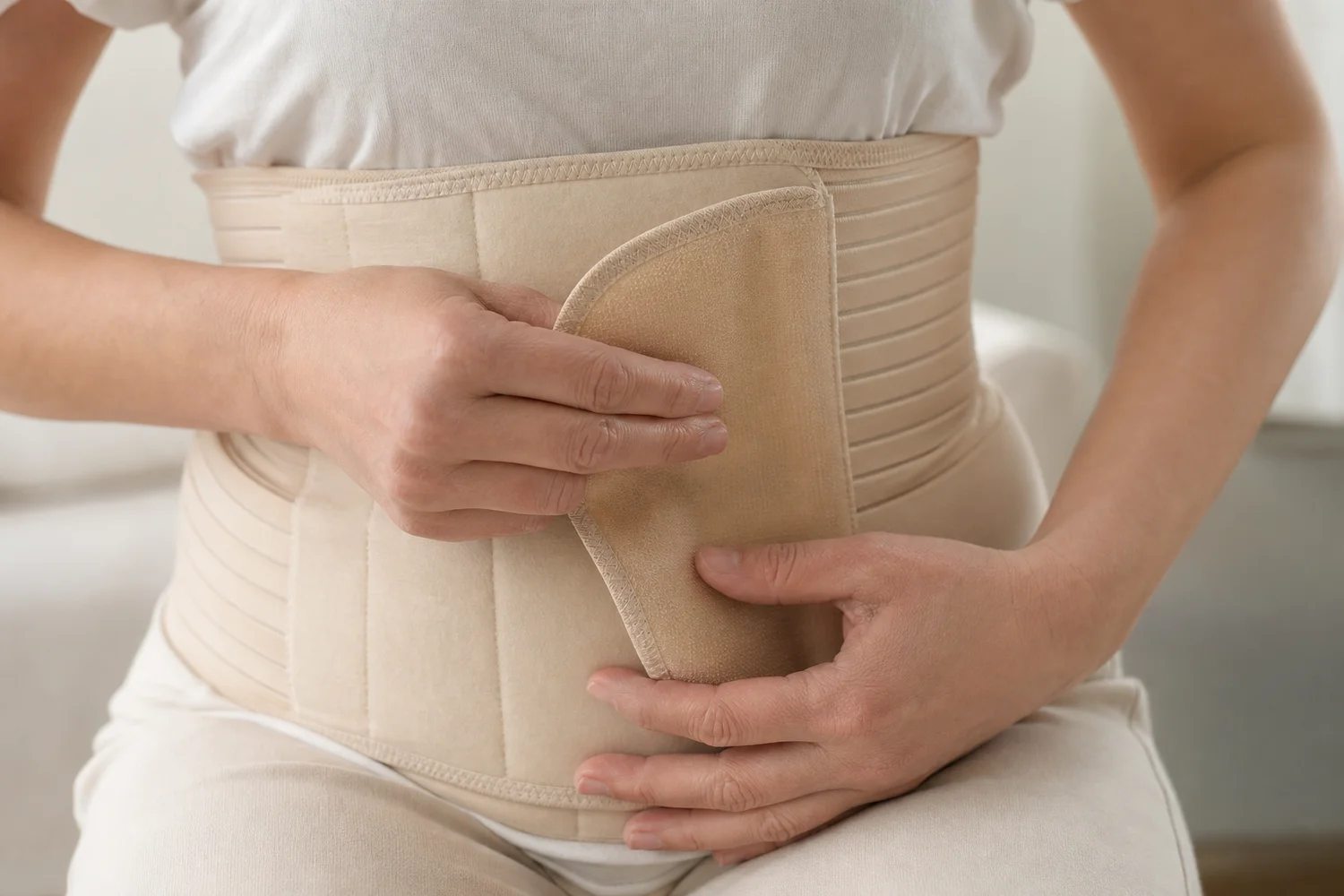
A well-fitted compression garment is one of the few recovery variables patients can actively control.
Pro tip: Numbness or reduced sensation across the lower abdomen is common and can persist for weeks to months — it’s a normal nerve-healing response, not a complication, unless paired with worsening pain, redness, or fever.
Manual lymphatic drainage massage, when recommended by a physiotherapist, can meaningfully reduce swelling in the first month. This is one area where structured aftercare — rather than a printed discharge leaflet — makes a measurable difference to how quickly discomfort settles.
Returning to Work and Daily Life After Abdominoplasty
Most patients with desk-based jobs return to work between weeks two and three, though this depends heavily on how physically demanding the role is and how the individual is healing. Anyone in a physically active job — retail, care work, manual trades — should plan for four to six weeks off, sometimes longer.
Driving is typically cleared around the two-week mark, once a patient can comfortably perform an emergency stop without wincing and is no longer taking sedating pain medication. Climbing stairs, light household tasks, and short outings are usually manageable by the end of week two, though anything involving core engagement — vacuuming, carrying shopping, lifting a toddler — stays restricted longer.
- Desk-based work: often possible from week 2–3
- Physically active work: typically 4–6 weeks, assessed individually
- Driving: usually cleared around week 2, once off sedating medication
- Childcare involving lifting: often restricted until week 6 or later
What Does Recovery Look Like 4–8 Weeks After Surgery?
Between weeks four and eight, most patients transition from restricted movement to near-normal daily activity, with light exercise reintroduced around week four to six and strenuous exercise, running, and heavy lifting cleared closer to week eight, usually with physiotherapy sign-off. Swelling continues to reduce, though it rarely disappears entirely within this window.
By week six, the internal muscle repair — the tightened rectus muscles from the original surgery — has typically progressed enough that light core-adjacent activity, like gentle walking on an incline or stationary cycling, becomes reasonable. Full abdominal exercise, gym training, and contact activity generally wait until a surgeon or physiotherapist confirms healing is on track, often around week eight to twelve.
Patients who combine abdominoplasty with another procedure — a breast lift, for example — should expect this window to extend, since combined surgeries carry a longer overall recovery arc than a single procedure alone.
What Activities Are Safe During Each Recovery Stage?
Recovery timelines vary by individual, but most reputable surgical guidance — including recommendations from bodies like the American Society of Plastic Surgeons — maps activity clearance to healing stages rather than fixed dates alone. The table below reflects typical ranges; a surgeon’s individual sign-off always takes priority over any general guide.
| Activity | Typical earliest clearance |
|---|---|
| Short walks | Day 1–2 |
| Driving | Week 2 |
| Desk-based work | Week 2–3 |
| Light cardio (walking, cycling) | Week 4–6 |
| Physically active work | Week 4–6 |
| Strenuous exercise, running | Week 8 |
| Heavy lifting, core training | Week 8–12 |
| Full sensation, final swelling resolution | 6–12 months |
| Mature scar appearance | 12–18 months |
Procedures done alongside abdominoplasty — liposuction as part of a lipoabdominoplasty, for instance — can shift some of these windows earlier or later depending on the combined surgical plan, which is exactly why an individual consultation matters more than a generic table.
KCM Clinic’s Comprehensive Abdominoplasty Program
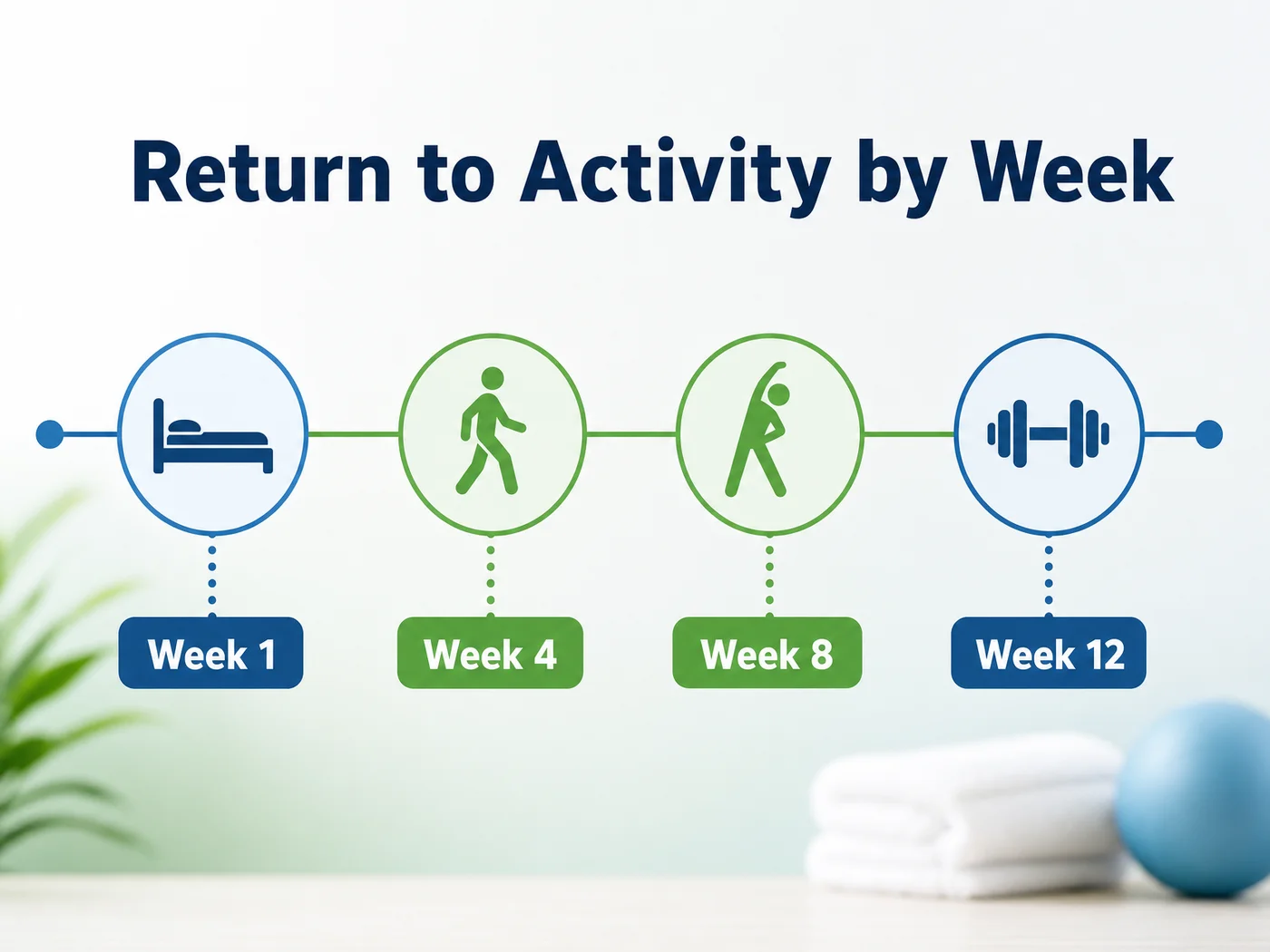
Recovery follows a fairly predictable arc — the variable is usually how closely structured aftercare gets followed.
KCM Clinic is a private, multidisciplinary surgical hospital in Jelenia Góra, Poland, operating under the same EU Medical Devices Regulation that governs surgery across Germany, France, and the rest of the bloc. Abdominoplasty sits within its plastic surgery programme, and every package is built around one principle: recovery support shouldn’t stop at hospital discharge.
KCM’s all-inclusive abdominoplasty package coordinates post-operative care, physiotherapy scheduling, and dedicated international patient nursing as a single managed process, rather than leaving self-directed recovery to a patient who’s just flown home. A named physiotherapist is scheduled as part of the package, not booked separately afterward, and the international patient team tracks each patient’s healing timeline in the weeks following discharge — checking in on drain care, compression garment fit, and any red-flag symptoms that warrant a follow-up call.
That structure matters most for the patients KCM sees most often: those travelling from the UK or Canada, managing recovery without their usual local support network nearby.
Key insight: Self-managed recovery leaves patients guessing whether a symptom is normal healing or something worth flagging — KCM’s model puts a physiotherapist and nursing contact in that decision loop from day one.
Patients weighing where to have surgery abroad often read tummy tuck Poland reviews from people who’ve already been through the process, since real patient accounts carry more weight than a clinic’s own description of its aftercare. For a broader look at how recovery time factors into total cost — time off work, physiotherapy sessions, follow-up visits — our abdominoplasty cost breakdown covers the full comparison. And for patients still deciding whether surgery abroad is the right route at all, cosmetic surgery abroad walks through the safety and logistics questions that usually come up first.
Get Started with KCM Clinic
Recovery time is one of the biggest unknowns patients weigh before booking abdominoplasty — and it’s exactly the part KCM’s all-inclusive package is built to remove the guesswork from, with physiotherapy and aftercare coordinated from the first consultation. A consultation costs nothing to arrange and comes with no obligation to book.
Learn more about KCM Clinic’s abdominoplasty packages
Frequently Asked Questions About Tummy Tuck Recovery Time
How long does it take to fully recover from a tummy tuck?
Most patients return to normal daily activity within 6–8 weeks and are cleared for strenuous exercise and heavy lifting by weeks 8–12, though individual healing varies. Final results, including mature scar appearance and contour refinement, take 12–18 months as swelling fully resolves and internal healing completes.
How painful is tummy tuck recovery?
Pain is sharpest in the first 48–72 hours and is generally well managed with prescribed medication under a surgeon’s guidance. By weeks two to three, most patients describe tightness and pulling rather than acute pain, with discomfort continuing to ease gradually through week six.
Can you drive two weeks after a tummy tuck?
Many patients are cleared to drive around week two, once they’re off sedating pain medication and can comfortably perform an emergency stop without wincing in pain. Individual clearance depends on healing progress and the surgeon’s assessment, so confirming this directly before getting behind the wheel is essential.
When can you return to the gym after a tummy tuck?
Light cardio, such as walking or stationary cycling, is often reintroduced around weeks four to six, while strenuous exercise, running, and core training typically wait until week eight to twelve. Physiotherapy sign-off, not a fixed calendar date, is what should ultimately determine actual clearance.