A graduate of the Faculty of Medicine of the Medical University of Silesia in Katowice (Poland). He gained his professional experience in:
1. the Department and Clinical Department of General and Endocrine Surgery of the Specialist Hospital in Bytom, Poloand,
2. European Institute of Telesurgery, IRCAD/EITS (Hôpitaux Universitaires), Strasbourg, France,
3. European School of Laparoscopic Surgery, Saint-Pierre University Hospital, Brussels, Belgium,
4. Aesculap Akademie, Tuttlingen, Germany,
5. Endo-Sugery Institute, Cincinnati, Ohio, U.S.A.,
6. Medical Expert Training Center General Surgery Kantonspital, Baden-Schweiz, Germany,
7. Imelda Hospital, Bonheiden, Belgium,
8. Covidien Tyco Healthcare European Training Center, Elancourt, France,
9. Department of General Vascular and Pediatric Surgery, AZ Sint-Jan Hospital in Bruges, Belgium,
10. The Biomechanics Institute of Valencia (IBV), Valencia, Spain,
11. Nemocnice s Polikliniku v Novy Jicin, Novy Jicin, Czech Republic,
12. Department of Medical and Surgical Digestive Diseases, Ecole Européenne de Chirurgie (EEC), Paris, France,
13. Amsterdam Medical Center, Amsterdam, The Netherlands.
14. He holds the position of Head of the General and Short-Term Surgery Department of the County Hospital in Świętochłowice, the Head of the General Surgery Department with the Metabolic and Barnominal Surgery Department, as well as in OSK Katowice-Ligotiators World Surgical Centers. He is the expert of the Provincial Court in Katowice.
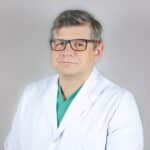
Author: Grzegorz Kowalski
Title: M.D., PhD
Job Title: Member of the Surgical Team at the Bariatric and Metabolic Surgery Center, KCM Hospital
Author description: A graduate of the Faculty of Medicine of the Medical University of Silesia in Katowice (Poland). He gained his professional experience in:
1. the Department and Clinical Department of General and Endocrine Surgery of the Specialist Hospital in Bytom, Poloand,
2. European Institute of Telesurgery, IRCAD/EITS (Hôpitaux Universitaires), Strasbourg, France,
3. European School of Laparoscopic Surgery, Saint-Pierre University Hospital, Brussels, Belgium,
4. Aesculap Akademie, Tuttlingen, Germany,
5. Endo-Sugery Institute, Cincinnati, Ohio, U.S.A.,
6. Medical Expert Training Center General Surgery Kantonspital, Baden-Schweiz, Germany,
7. Imelda Hospital, Bonheiden, Belgium,
8. Covidien Tyco Healthcare European Training Center, Elancourt, France,
9. Department of General Vascular and Pediatric Surgery, AZ Sint-Jan Hospital in Bruges, Belgium,
10. The Biomechanics Institute of Valencia (IBV), Valencia, Spain,
11. Nemocnice s Polikliniku v Novy Jicin, Novy Jicin, Czech Republic,
12. Department of Medical and Surgical Digestive Diseases, Ecole Européenne de Chirurgie (EEC), Paris, France,
13. Amsterdam Medical Center, Amsterdam, The Netherlands.
14. He holds the position of Head of the General and Short-Term Surgery Department of the County Hospital in Świętochłowice, the Head of the General Surgery Department with the Metabolic and Barnominal Surgery Department, as well as in OSK Katowice-Ligotiators World Surgical Centers. He is the expert of the Provincial Court in Katowice.
Additional Information: He is the author and co-author of numerous scientific publications. He is an active member of national and international surgical scientific societies (Member of the Polish Medical Society, Member of the Society of Polish Surgeons, Member of the Videosurgery Section of the Society of Polish Surgeons, Member of the Metabolic and Bariatric Section of the Society of Polish Surgeons) and IFSO (International Federation for the Surgery of Obesity and Metabolic Disorders).
Organization: KCM Clinic
Medical Specilization: Bariatric and Metabolic Surgery, Laparoscopic Surgery in the Fields of General Surgery and Bariatrics, General and Endocrine Surgery, Oncological Surgery
Work Experience: +15 years
Language: PL, EN, CZE, RUS
Email and Phone: grzegorz.kowalski@kcmclinic.pl;
When changing eating habits and exercising fails to bring satisfactory results, bariatric surgery is often the last resort for patients with advanced obesity. But while many people see it as a sure way to achieve dramatic weight loss quickly, various factors can lead to complications ranging from a weight loss plateau to weight regain. That’s…
Although most people immediately think of gastric bypass when they hear bariatric weight loss surgery, there are in fact many options for those considering bariatric surgery: gastric bypass, gastric sleeve, gastric band, etc. Each one of these surgeries has its own properties, its own way to induce weight loss, and its own advantages and disadvantages. …
While gastric sleeve surgery is a life-changing weight loss procedure, it is important to remember it is an invasive surgery where a part of the stomach is removed. Your body needs considerable time to recover, and during this period, you need to restrict your activities, follow a specific diet, and take certain medications. The recovery…
Gastric Sleeve Sleeve gastrectomy, also called gastric sleeve, is an invasive surgical procedure that consists of removing part of the stomach to reduce its overall size. How much of the stomach is removed depends on each patient, but up to 70%-80% can be removed. The patient’s new stomach will be much smaller, and therefore, able…
Also called “calibrated vertical gastroplasty with gastric resection” or “longitudinal gastrectomy”, sleeve-gastrectomy is a digestive surgical procedure performed on obese patients. This operation consists of the removal of a part of the stomach.
Following a strict diet after surgical treatment of obesity is one the basic rules in order to fully achieve and enjoy the effects of the operation. Reducing the stomach volume significantly affects the amount of food consumed by the patient, so the type and nutritional value of products is very important for the process of…
Patients undergoing surgical treatment of obesity approach the procedure with the hope that a reduction of the stomach capacity and introduction of dietary recommendations will help them to achieve a significant body weight reduction and to return to a normal BMI. Although in many cases this effect is achieved after the first operation, e.g., after…
Bariatrics is a branch of medicine that deals with the treatment of class I, II, and III obesity by making surgical changes to the gastrointestinal tract in order to reduce the amount of food that can be consumed by the patient.
According to the WHO (World Health Organisation), over 1/3 of the world’s population is overweight.
Bariatric surgery is an exceptionally effective method to tackle obesity in patients for whom attempts to change diet and lifestyle did not bring desired results. Surgical treatment of obesity is commonly performed all over the world. It enables morbidly obese patients to significantly reduce their body weight.