

Metal Hip Replacement: Durability, Materials, and Modern Safety Data
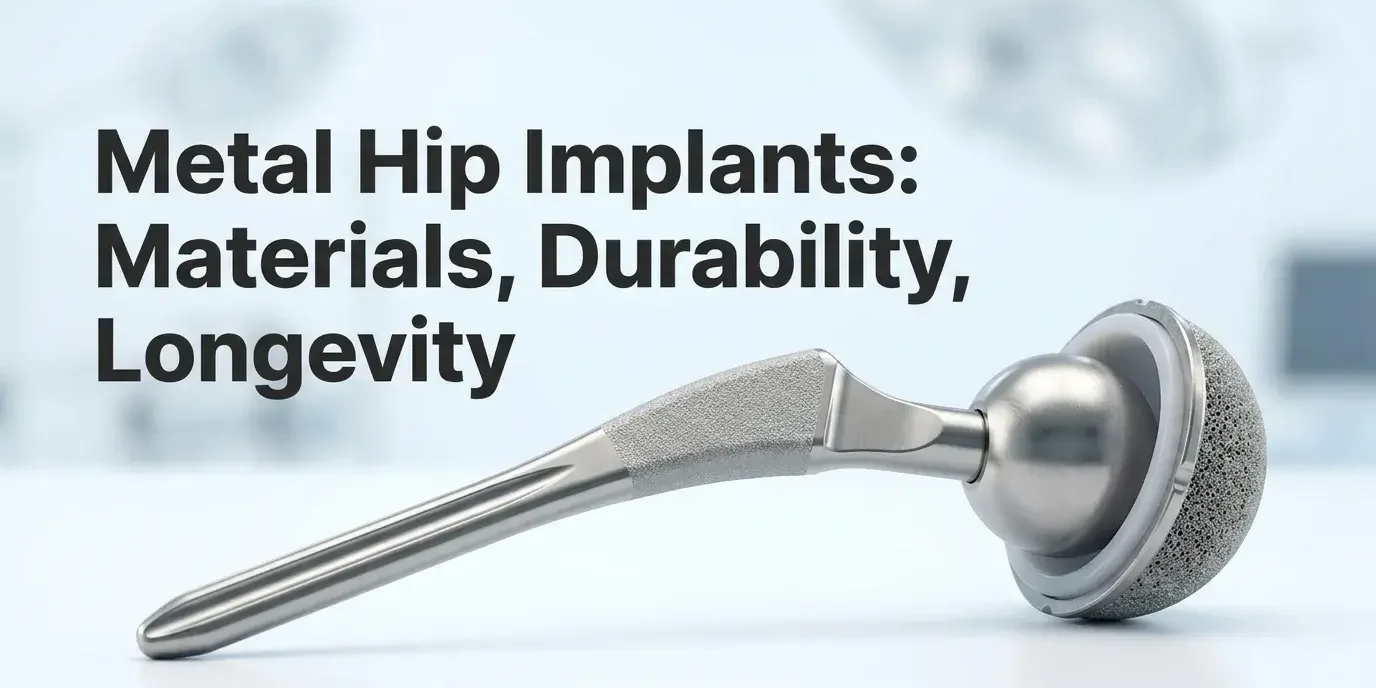
A metal hip replacement pairs a metal femoral head and stem — usually titanium or cobalt-chromium alloy — with a plastic- or ceramic-lined socket. Modern versions bear little resemblance to the all-metal design that dominates recall headlines. UK and Swedish joint registries both report revision rates under 10% at 10 years for today’s standard metal-on-plastic systems.
What Is a Metal Hip Replacement?
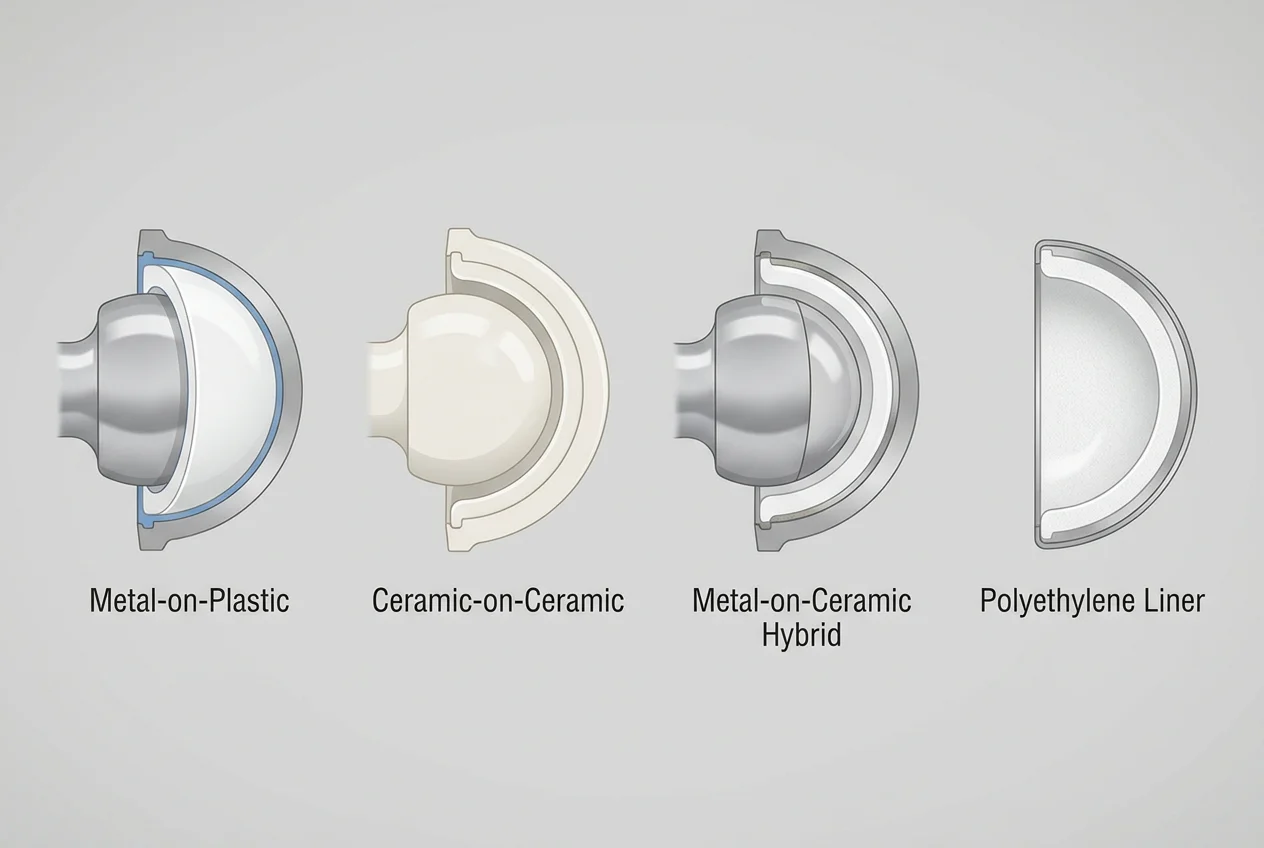
A metal hip replacement is a total hip arthroplasty in which the femoral head and stem are manufactured from metal — most often titanium alloy or cobalt-chromium — while the socket is lined with polyethylene (medical-grade plastic), ceramic, or, less commonly, another metal surface. The metal-on-plastic pairing is the most widely implanted configuration in the world today.
Worth stating plainly: a search for “metal hip replacement” surfaces plenty of content about metal-on-metal (MoM) implants — the design in which both surfaces were metal, largely phased out after 2010 over metal-ion concerns. That design is now a small fraction of implants placed. Anyone reading older forum posts or lawsuit sites and wondering if metal itself is the problem can set that worry aside — it was the specific metal-on-metal bearing surface, not the metal component itself.
Key Takeaways
- Metal hip implants (typically titanium or cobalt-chrome alloy) offer 15+ year durability with revision rates around 5–10% at the 10-year mark, making them a proven choice for younger, more active patients.
- Metal-on-plastic — a metal cup or stem paired with a plastic liner — is the most common configuration; metal-on-metal is reserved for narrow cases due to rare metal-ion concerns.
- Implant choice depends on patient age, activity level, bone quality, and surgeon expertise; material alone doesn’t decide the outcome.
- Revision rates for well-placed modern metal implants are markedly lower than the historical metal-on-metal data patients often find first.
- Private surgery costs roughly £15,000–£25,000 in the UK and from around CAD 18,000 in Canada, covering implant, surgeon, and facility.
The Metal Alloys Used in Hip Implants
Two alloys account for nearly every metal hip component fitted today, and surgeons pick between them based on how the implant will be fixed and where it sits in the joint.
- Titanium alloy (Ti-6Al-4V). Bonds directly to living bone through osseointegration, making it the standard choice for cementless (press-fit) stems. Its stiffness sits closer to natural bone than cobalt-chrome, which helps distribute load more evenly.
- Cobalt-chromium alloy. Harder and more scratch-resistant than titanium, so it’s typically used for the femoral head or bearing surfaces that articulate against plastic or ceramic, where wear resistance matters more than bone bonding.
- Stainless steel. Occasionally used in older or lower-cost systems; rare in current hip arthroplasty because titanium and cobalt-chrome outperform it on fatigue strength.
Many modern implants combine both: a titanium stem for fixation, a cobalt-chrome or ceramic head for the bearing surface. The same alloy logic applies to knee implants — see our titanium knee replacement guide for the parallel.
How Long Do Metal Hip Implants Last?
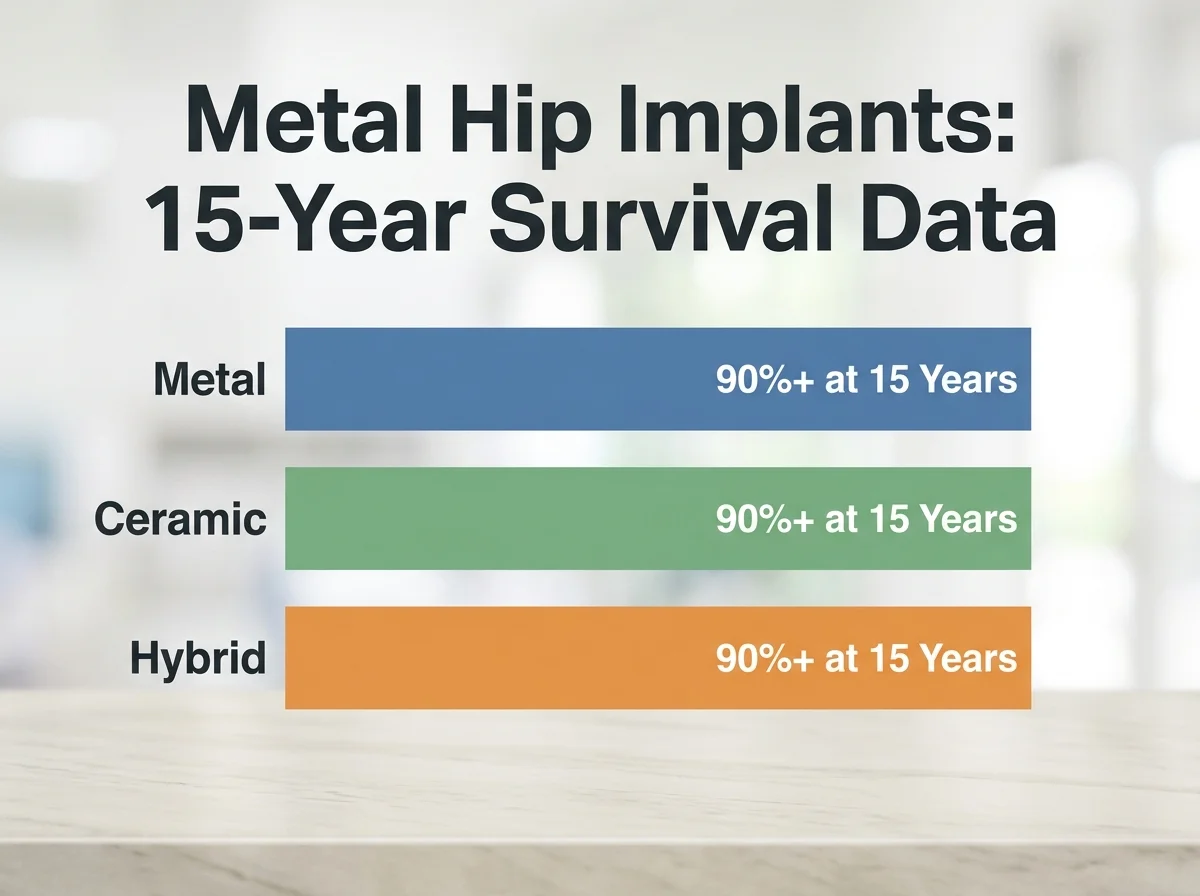
Metal hip implants typically last 15 years or longer, with data from the Swedish Hip Arthroplasty Register and the UK National Joint Registry both showing implant survival above 90% at the 15-year mark for metal-on-plastic and metal-stem hybrid systems. That figure has climbed steadily as surgical technique, implant design, and patient selection have all improved since the 2000s.
Revision rates tell a similar story once metal-on-metal is separated out:
- Metal-on-plastic: roughly 5–10% revision at 10 years in most registry cohorts.
- Ceramic-on-ceramic and metal-on-ceramic hybrids: comparable or slightly lower revision rates, at a materially higher implant cost.
- Historical metal-on-metal: revision rates several times higher within the first 5–7 years in the specific large-head designs that triggered the 2010s recalls.
By the numbers: Infection rates across all modern hip implant materials sit in a similar low range — material choice affects wear and loosening far more than infection risk, which depends mostly on surgical technique and post-operative care.
Metal vs Ceramic: Which Implant Material Lasts Longer
Metal and ceramic are the two dominant bearing choices once metal-on-metal is off the table, and neither wins outright — they trade off differently.
| Factor | Metal-on-Plastic | Ceramic-on-Ceramic | Metal-on-Ceramic Hybrid |
|---|---|---|---|
| 10-year revision rate | ~5–10% | ~3–7% | ~4–8% |
| Wear pattern | Gradual plastic liner wear | Very low wear, brittle under impact | Low wear, no metal-ion release |
| Best suited for | Older or lower-activity patients | Younger, active patients | Patients wanting ceramic’s wear profile with metal’s toughness |
| Relative implant cost | Lowest | Highest | Mid-to-high |
| Rare failure mode | Liner wear, aseptic loosening | Ceramic fracture (uncommon) | Minimal metal-ion release vs true MoM |
Ceramic wears more slowly but carries a small, well-documented fracture risk under high impact. Metal-on-plastic has the longest clinical track record of any combination in orthopaedic history.
Fixation method is a separate decision from bearing material. Patients weighing cemented vs uncemented hip replacement options should treat that choice independently of which metal or ceramic combination their surgeon recommends.
Is a Metal Hip Replacement Right for You?
A metal hip replacement generally suits patients who want the longest clinical track record available, particularly those over 55–60 with moderate activity levels and adequate bone density. Younger, highly active patients sometimes lean toward ceramic for its lower wear rate, while patients with lower bone density often need a cemented metal stem regardless of bearing choice.
Bone quality plays a bigger role in this decision than most patients expect — anyone managing reduced bone density should read our guide on osteoporosis treatment before finalising an implant plan with their surgeon.
KCM Clinic’s orthopaedic team fits metal and hybrid hip systems using implants from Zimmer Biomet, Stryker, and Johnson & Johnson, selected on registry performance rather than price. As a hospital operating in the EU, KCM works under the same medical device regulation that governs implant approval in Germany and France. For UK and Canadian patients used to an open-ended wait, the practical difference is a fixed surgical date: a Thursday consultation, Saturday surgery, and Monday discharge is a realistic timeline once imaging and bloodwork are cleared in advance.
Worth knowing: The “best” material is the one matched to your bone quality, age, and activity level — not the newest one on the market. A thorough imaging review before surgery matters more than the brand name on the implant.
What Are the Risks and Complications of Metal Hip Replacements?
Metal hip implants carry the same baseline surgical risks as any hip replacement — infection, blood clots, dislocation, and leg-length differences — plus a metal-specific risk of ion release that is now almost exclusively associated with older metal-on-metal designs rather than current metal-on-plastic systems. Surgeons monitor at-risk patients with routine blood tests and imaging where relevant.
A few complications are worth naming directly:
- Metal-ion release. Rare in metal-on-plastic implants; more relevant to legacy large-head metal-on-metal designs, most of which were recalled or discontinued years ago.
- Aseptic loosening. The most common cause of long-term revision across all implant materials, usually developing gradually over 10–15+ years.
- Metal allergy. Uncommon, but titanium alloy is the standard substitute for the small percentage of patients with a documented nickel or cobalt sensitivity.
Patients who had a metal-on-metal implant placed before 2012 and haven’t had recent follow-up imaging should raise it with their surgeon, regardless of whether they have symptoms.
Private Metal Hip Replacement Costs in the UK and Canada
Private metal hip replacement typically runs £15,000–£25,000 in the UK and from around CAD 18,000 in Canada, depending on implant system, surgeon fees, and facility. That figure usually bundles the pre-op consultation, implant, surgery, hospital stay, and initial physiotherapy into one package rather than itemised separate bills.
EU-based options can offer meaningfully lower all-in pricing than UK or Canadian private care while using the same implant manufacturers and device regulations — price and quality don’t automatically move together.
Get Started with KCM Clinic
If imaging has confirmed you need a hip replacement, the next useful step is a conversation with a surgical team that can review your scans and recommend a specific implant material for your case. KCM Clinic’s orthopaedic coordinators can talk through metal, ceramic, and hybrid options against your bone density and activity level, and outline a realistic surgical timeline.
Book a Hip Replacement Consultation with KCM Clinic
FAQ
Which is better for a hip replacement, ceramic or metal?
Neither is universally better. Metal-on-plastic has the longest clinical track record and suits older or lower-activity patients well, while ceramic wears more slowly and often suits younger, more active patients — the right choice depends on age, bone quality, and activity level.
Are metal-on-metal hip replacements still used?
Rarely. Metal-on-metal bearings were largely phased out after 2010 due to metal-ion concerns in specific large-head designs, and most surgeons now use metal-on-plastic, ceramic, or hybrid combinations instead. A small number of resurfacing cases still use metal-on-metal in carefully selected younger male patients.
What are the risks of a metal hip replacement?
Modern metal hip implants carry standard surgical risks — infection, blood clots, dislocation — plus a small chance of aseptic loosening over 10-15+ years. Metal-ion release, the risk most associated with “metal hip replacement” searches, applies almost entirely to older metal-on-metal designs, not current metal-on-plastic systems.
How much does a metal hip replacement cost privately?
Private metal hip replacement typically costs £15,000–£25,000 in the UK and from around CAD 18,000 in Canada, usually as an all-inclusive package covering the implant, surgery, hospital stay, and initial physiotherapy. EU-based options can offer lower all-in pricing under the same device regulations as UK and Canadian private providers.