

Laminectomy Recovery: What to Expect Week by Week
Laminectomy recovery typically takes 6 to 12 weeks, with most patients walking within hours of surgery and returning to light daily activity in 2 to 4 weeks. Endoscopic minimally invasive laminectomy — the technique used for most disc herniation and spinal stenosis cases at KCM Clinic — tends to sit at the faster end of that range, since less muscle disruption means less to heal from.
What Is Laminectomy Surgery?
A laminectomy removes part of the lamina — the bony arch at the back of a vertebra — to relieve pressure on a compressed spinal nerve caused by a herniated disc or spinal stenosis. The goal isn’t to fix the disc itself but to give the nerve room again, which is why leg pain and numbness often ease faster than back pain does.
Dr. Stanisław Kwiek, the specialist neurosurgeon who reviews KCM Clinic’s spine content, performs laminectomy using an endoscopic minimally invasive approach for most disc herniation and spinal stenosis referrals. The technique relies on Medtronic and Stryker spine visualisation and instrumentation systems to access the lamina through a small tubular corridor rather than a long open incision.
That distinction — endoscopic versus traditional open surgery — is the single biggest factor in how fast recovery goes. Open laminectomy cuts through more muscle to reach the spine directly, which means more tissue has to heal before movement feels normal again.
Key Takeaways
- Laminectomy removes part of the vertebral lamina to relieve nerve compression from a herniated disc or spinal stenosis; it does not repair the disc itself.
- Endoscopic minimally invasive laminectomy, the approach used for most cases at KCM Clinic, generally heals faster than traditional open surgery because it disrupts less muscle.
- Most patients experience noticeable symptom relief within 2 to 4 weeks as post-surgical swelling around the nerve subsides.
- Activity builds in three stages: rest and short walks (weeks 1–2), light activity and early physiotherapy (weeks 3–6), and a return to normal function and work (weeks 7–12).
- Rare complications — infection, nerve irritation, or incomplete relief — are minimised through sterile minimally invasive technique and structured post-operative monitoring.
What Happens Immediately After Laminectomy Surgery?
Most patients are helped to sit up and take a few supported steps within hours of an endoscopic laminectomy, compared with a day or two after traditional open surgery. Early walking isn’t optional bravado — it lowers the risk of blood clots and keeps the spine from stiffening while swelling is still settling.
Hospital stay reflects the same gap. Endoscopic cases are frequently discharged the same day or after one overnight stay, while open laminectomy typically keeps patients in for two to three nights for wound monitoring and pain control.
Nursing checks continue at short intervals through the first day — wound status, leg strength, and sensation compared against the pre-operative baseline. Discharge is cleared once you can walk a set distance unaided, not by the calendar alone.
How Much Pain Is Normal During Laminectomy Recovery?
Pain after laminectomy is generally described as manageable soreness at the incision site plus a residual ache where the nerve was compressed, controlled through a tapering medication schedule over 2 to 4 weeks. Leg pain from nerve compression often improves faster than the surgical site itself feels sore.
Ice in the first 48–72 hours reduces swelling; heat afterward loosens surrounding muscle that tightens from days of altered posture. Guided physiotherapy, not bed rest, is what actually shortens the pain curve — sustained inactivity leads to stiffness that then takes longer to work through.
Key insight: A pain-free week three doesn’t mean the tissue is fully healed. Reduced discomfort reflects nerve decompression and swelling resolution, while deeper tissue strength continues building for weeks afterward.
Laminectomy Recovery Timeline: Week by Week
Laminectomy recovery moves through three broad phases — rest and gentle walking in weeks 1–2, light activity and early physiotherapy in weeks 3–6, and a graded return to normal function in weeks 7–12 — with endoscopic technique consistently tracking faster than open surgery at every stage.
| Recovery Milestone | Endoscopic Minimally Invasive | Traditional Open Laminectomy |
|---|---|---|
| Hospital stay | Day case to 1 night | 2–3 nights |
| First assisted walk | Within hours | Day 1–2 |
| Light daily activity | 1–2 weeks | 3–4 weeks |
| Desk-based work | 2–3 weeks | 4–6 weeks |
| Full recovery | 6–8 weeks | 8–12 weeks |
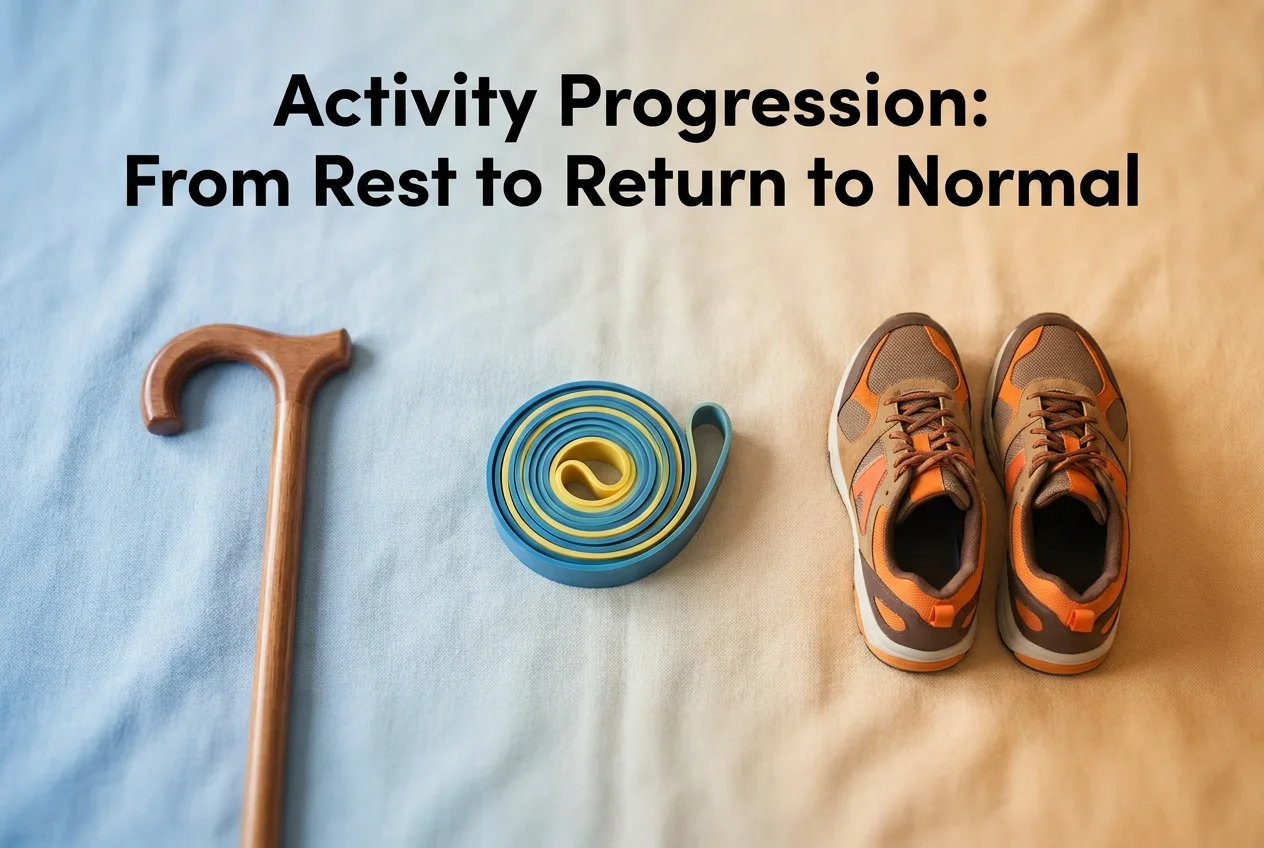
Each stage builds on the one before it — skipping ahead is what causes setbacks.
Individual healing still varies with age, general fitness, and how much lamina was removed. A single-level laminectomy for a contained disc herniation heals faster than a wider decompression for multi-level spinal stenosis, regardless of technique.
Patients weighing surgery against other options first should read our broader guide to slipped disk treatment, from conservative care through endoscopic surgery — it covers the decision this timeline assumes has already been made. For a wider view across spine procedures generally, our week-by-week guide to spine surgery recovery puts laminectomy in context alongside fusion and discectomy.
When Can I Return to Work After Laminectomy Surgery?

Return to work follows job type as much as it follows the calendar.
Desk-based work is realistic 2 to 3 weeks after endoscopic laminectomy and 4 to 6 weeks after open surgery; physically demanding jobs involving lifting or prolonged standing typically need 8 to 12 weeks either way. Your surgeon’s clearance should always override a generic number, since it accounts for exactly how much lamina was removed and how you’re healing.
A phased return — reduced hours before full duties — produces better outcomes than switching back all at once. KCM Clinic’s all-inclusive post-operative package, including structured physiotherapy and coordinator-led follow-up after patients travel home, exists specifically to shorten that gap between “feeling better” and “cleared for normal duties.”
For UK and Canadian patients planning surgery abroad, that structure answers the practical question behind the medical one: how much time to build into travel and work leave. Front-loading the intensive monitoring into the first two weeks lets patients fly home with a documented plan instead of an open-ended “see how you feel.”
Physical Therapy During Laminectomy Recovery
Physical therapy after laminectomy starts with short supervised walks in the first week and progresses through core-stabilisation work, posture retraining, and graded strengthening over 6 to 8 weeks. Skipping a stage to “catch up” is the most common cause of setbacks, since each phase is meant to confirm the last one healed properly.
- Weeks 1–2: assisted walking, breathing exercises, gentle range-of-motion movement
- Weeks 3–6: core-stabilisation exercises, posture correction, light functional tasks
- Weeks 7–12: progressive strengthening, balance work, and activity conditioning tailored to your job
A physiotherapist who hasn’t seen your operative notes can’t safely judge when to progress you. That continuity between surgeon and physiotherapist matters more than any single exercise in the plan.
What Complications Can Occur After Laminectomy, and How Are They Prevented?
Complications after laminectomy are rare and include infection, nerve irritation, or incomplete symptom relief — risks reduced through sterile minimally invasive technique, experienced surgical teams, and structured post-operative monitoring. None of these are common outcomes; all are worth recognising early.
Warning signs that warrant same-day medical review:
- New or worsening numbness, tingling, or weakness in the legs
- Fever, or redness and discharge around the incision
- Loss of bladder or bowel control (a genuine emergency)
What this means for you: Most symptoms flagged during recovery — mild swelling, transient numbness, fatigue — are expected healing, not emergencies. Daily specialist review exists to tell the two apart, not to alarm you unnecessarily.
Older patients with osteoporosis often follow a modified protocol, since healing bone around the surgical site needs additional protection. Our guide to osteoporosis diagnosis and treatment explains how bone health interacts with spinal stability and fall risk during recovery.
Exercise and Sports After Laminectomy Recovery
Low-impact exercise — walking, stationary cycling, swimming once the incision has fully closed — generally resumes around week 6 to 8. Contact sports, running, and heavy resistance training need longer, usually not before 3 to 6 months, since the surrounding tissue and stabilising muscles need that time to rebuild strength around the decompressed segment.
Bending and twisting under load are the last movements to return, since they’re often the exact motions that caused the original disc problem. A surgeon’s clearance at the 3-month mark, not a fixed date, should decide when those movements are genuinely safe again.
Get Started with KCM Clinic
If you’re weighing laminectomy abroad, the technique matters as much as the surgeon’s experience. KCM Clinic’s endoscopic minimally invasive approach, backed by Medtronic and Stryker spine equipment and an all-inclusive post-operative programme, is built to shorten the gap between surgery and normal life.
Learn more about KCM Clinic’s minimally invasive spine surgery programme
Frequently Asked Questions
How long does laminectomy surgery itself take?
Endoscopic minimally invasive laminectomy typically takes 45 minutes to 1.5 hours, depending on how many levels are involved. Traditional open laminectomy can run longer, often 1.5 to 3 hours, because more tissue must be carefully retracted to reach the spine.
Can I walk the same day as laminectomy surgery?
Yes — most patients who have endoscopic laminectomy walk with assistance within hours of surgery, and this early movement is encouraged specifically to reduce blood clot risk. Patients who have traditional open surgery usually walk by day one or two instead.
How long until I can sleep normally after laminectomy?
Most patients sleep in a comfortable supported position — often on their back or side with a pillow between the knees — within the first week, and return to their normal sleep position by week 3 to 4. Log-rolling to get in and out of bed protects the surgical site during that window.
Does laminectomy require a hospital stay?
Endoscopic laminectomy is frequently a day case or a single overnight stay, while traditional open laminectomy typically requires 2 to 3 nights for wound monitoring and pain control. Your surgeon confirms the expected stay based on how much lamina is removed and your overall health.