

Long Term Effect of Gastric Bypass: What the Research Shows
Twelve years after Roux-en-Y gastric bypass, patients in the Utah Obesity Study had kept off an average of 26.9% of their starting body weight. The same patients also needed lifelong vitamin supplementation and a fair number developed problems no one mentions in the first consultation. That is the honest shape of the long term effect of gastric bypass: durable for most, demanding for all.
This article is physician-reviewed patient education from KCM Clinic, reviewed by Dr Stanisław Kwiek, MD, PhD. It is general information, not a diagnosis, and your own bariatric surgeon decides what suits you.
Key Takeaways
- Most patients keep a large share of their weight loss for 10 to 15 years, but gradual regain after year five is common. Published studies put significant regain in roughly one in five to one in three patients, depending on how it is defined.
- Nutritional deficiencies (B12, iron, calcium, vitamin D) are among the most common long-term effects of gastric bypass. Lifelong supplements and bloodwork every 6 to 12 months are standard guidance, not optional extras.
- Complications such as internal hernia, marginal ulcer, and bowel obstruction can appear years after surgery, so knowing the warning signs matters.
- Revision surgery is needed in a minority of patients over the long run, usually for weight regain, mechanical problems, or severe deficiency.
- Long-term studies also show lower all-cause mortality and strong diabetes improvement, which is why surgeons still recommend bypass for the right patient.
What Is the Long Term Effect of Gastric Bypass?
The long-term effects of gastric bypass include sustained weight loss for most patients, improved or resolved type 2 diabetes, and lower cardiovascular risk. They also include permanent changes to nutrient absorption, a risk of late complications such as internal hernia or marginal ulcer, and a gradual drift in weight after about five years.
The numbers below come from the largest long-term cohorts and from published bariatric guidelines. They are ranges, because definitions and follow-up rates differ between studies.
| Long-term outcome | What the research reports | Typical timeframe |
|---|---|---|
| Weight kept off | About 25–27% of starting body weight (Swedish Obese Subjects; Utah Obesity Study) | 10–15 years |
| Type 2 diabetes remission | About 62% at six years, falling to about 51% at 12 years (Utah Obesity Study) | 6–12 years |
| All-cause mortality | Around 30% lower than matched non-surgical patients (Swedish Obese Subjects, hazard ratio 0.70) | Median 24 years |
| Vitamin B12 deficiency | Roughly 10–50% in patients not taking adequate supplements | 2–5 years |
| Iron deficiency | Common, higher in menstruating women, with published estimates of 20–50% | Within 5 years |
| Revision surgery | Roughly 5–15% in most series, depending on definition | Over 10 years |
By the numbers: The same Utah patients who kept off 26.9% of their weight at 12 years had a diabetes remission rate that slipped from 62% to 51% over that time. Benefits last, but not at their peak.
How Long Do Gastric Bypass Results Last?
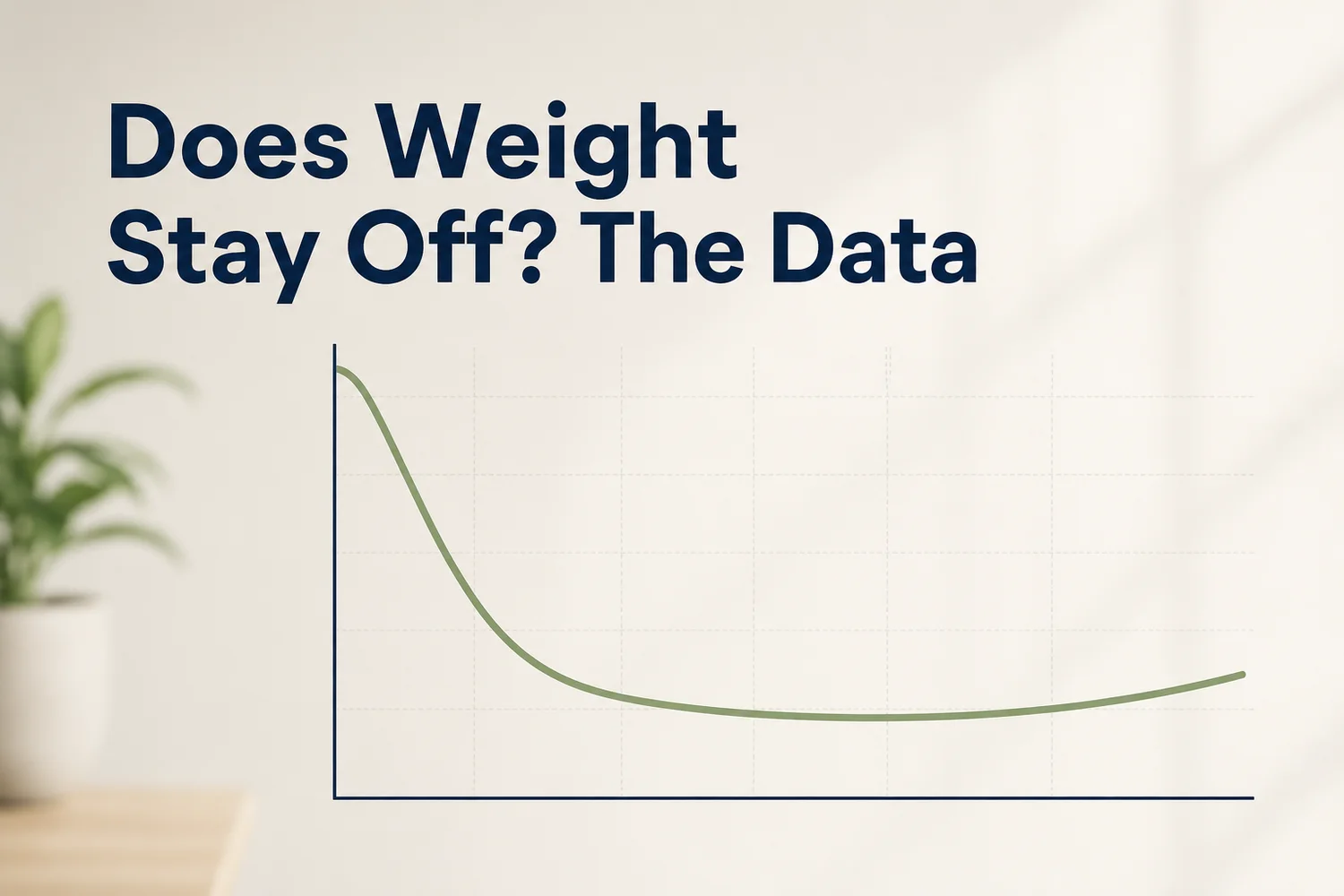
Gastric bypass results last for most patients well beyond a decade, with typical maximum weight loss at 12 to 24 months followed by a modest regain that levels off. Long-term data show average weight loss of roughly a quarter of starting body weight at 10 to 15 years, though individual results vary widely.
Think of the curve as a steep drop, a low point around year two, and then a slow upward slope. The slope is gentle for some people and steeper for others.
What decides which way you go? Eating patterns, physical activity, sleep, medication, and psychological support all feed in. So does the anatomy: pouch and anastomosis size can stretch over time.
Is the Long Term Effect of Gastric Bypass on Weight Maintained?
For most patients, yes, at least in part. Regain of 10–25% of the weight originally lost is common between years two and ten, but most patients remain far below their starting weight. A smaller group regains enough to need medical or surgical review.
Early expectations matter here. Our guide to weight loss in the first month after bariatric surgery explains why fast early loss is a poor predictor of year-ten outcomes.
Regain is rarely a single cause. Common contributors:
- Grazing on small, frequent portions of soft, calorie-dense food
- Fluid calories such as sugary drinks, alcohol, and milky coffees
- Dropping out of follow-up and support groups
- Medication changes, hormonal shifts, and low mood
- A stretched pouch or enlarged connection between pouch and bowel
Different operations age differently. If you are weighing procedures, our comparison of gastric band versus gastric bypass covers durability, and the gastric sleeve surgery guide covers the other main option.
Can Gastric Bypass Complications Develop Years Later?
Yes. Gastric bypass complications can develop years after surgery, including internal hernia, marginal ulcer, bowel obstruction, gallstones, and dumping syndrome. Most are treatable when caught early, which is why new, persistent abdominal pain should always be assessed rather than put down to normal digestion.
Rates vary between series, but the main late problems look like this:
- Internal hernia: a loop of bowel slips through a gap created by the rerouting. Reported in roughly 1–5% of patients, often after significant weight loss has made the gaps larger.
- Marginal ulcer: an ulcer where the pouch joins the bowel. Smoking and regular anti-inflammatory painkillers (NSAIDs) are the best-known risk factors.
- Bowel obstruction: from adhesions or hernia, presenting as cramping pain and vomiting.
- Gallstones: formation is common during rapid weight loss, and some patients need gallbladder surgery.
- Late dumping and low blood sugar: shaky, sweaty spells after meals.
Worth knowing: Severe, cramping abdominal pain after bypass is never “just wind.” Internal hernia can strangulate bowel, so it needs same-day medical assessment, ideally by a team that understands the anatomy.
If you want a deeper look at specific late problems, a dedicated article on late complications of gastric bypass surgery is planned for this cluster.
What Nutritional Deficiencies Occur After Gastric Bypass Surgery?
The most common deficiencies after gastric bypass are vitamin B12, iron, calcium, and vitamin D, because the bypassed stomach and duodenum are where these nutrients are normally absorbed. Without lifelong supplements, deficiency becomes likely, and blood tests every 6 to 12 months catch it early.
Published guidelines from bariatric societies, including ASMBS and BOMSS, describe the same core pattern:
| Nutrient | Why it falls | What can happen if missed |
|---|---|---|
| Vitamin B12 | Less stomach acid and intrinsic factor | Anaemia, tingling, memory problems |
| Iron | Duodenum bypassed; low acid limits absorption | Fatigue, hair loss, anaemia |
| Calcium and vitamin D | Reduced uptake in the upper bowel | Bone loss, higher fracture risk |
| Folate, thiamine | Lower intake and altered absorption | Anaemia; rarely, serious nerve problems |
Deficiency can develop slowly and without obvious symptoms, which is why routine bloodwork matters more than how you feel. Our guide to the gastric bypass multivitamin explains what a bariatric-specific supplement should contain, and the gastric bypass recipes article shows how to build protein- and nutrient-dense meals that fit the smaller pouch.
What this means for you: Skipping supplements is the single most avoidable long-term risk of bypass. Missing a month is unlikely to harm you. Missing years can.
How Does Aging Affect Gastric Bypass Outcomes?
Aging after gastric bypass raises the importance of bone density, muscle mass, and nutritional monitoring. Reduced calcium absorption plus age-related bone loss increases fracture risk, while protein shortfalls can speed muscle loss, so older patients benefit from periodic bone scans and protein-focused eating.
Pregnancy, menopause, and changing medications can also alter nutritional needs. Patients who stay in annual follow-up tend to catch these shifts early.
There is a positive side to the same data. Long-term studies show lower cardiovascular risk and fewer cancers linked to obesity, which supports the survival advantage described next.
What Is the 10-Year Survival Rate for Gastric Bypass?
Studies do not report a single 10-year survival rate for gastric bypass, but they consistently show lower mortality than matched non-surgical patients. The Swedish Obese Subjects study found roughly 30% lower all-cause mortality, and a 2020 analysis estimated about three extra years of life expectancy.
Operative risk is small and falls with surgeon experience. Late deaths are mostly driven by the same conditions obesity causes, not by the operation itself. A future article will take a closer look at whether bariatric surgery shortens your life.
When Do You Need Revision Surgery After Gastric Bypass?
Revision surgery after gastric bypass is considered when there is significant weight regain with a measurable anatomical cause, a mechanical complication such as a stricture or recurrent ulcer, or a severe deficiency that cannot be managed medically. Most series report revision in a minority, roughly 5–15% over a decade.
Revision is a different operation from the first one. Scar tissue, altered anatomy, and malnutrition risk all raise the stakes, so the work-up usually includes endoscopy, imaging, and a dietetic and psychological review before any decision.
Not every case of regain needs a second operation. Many patients respond to structured dietetic support, a review of medication, or the newer anti-obesity drugs. Surgery is for those where the anatomy itself is the problem.

Should I Consider Revision Surgery?
If you have regained weight, have symptoms that will not settle, or have persistent deficiency despite supplements, the first step is a full assessment rather than a decision. KCM Clinic’s bariatric team in Jelenia Góra, Poland, an EU hospital working to the same regulatory standards as Germany and France, reviews gastric bypass patients for revision and aftercare, with dietetics and psychology built into the care plan.
Treatment is individual, and nothing here replaces advice from your own surgeon. If you would like a second opinion on your anatomy and options, our international patient team can arrange one.
Book a Bariatric Aftercare Consultation with KCM Clinic
Frequently Asked Questions
Is gastric bypass safe in the long term?
For most patients, yes. Large cohort studies show lower mortality and major improvements in diabetes and heart risk compared with non-surgical care. It does require lifelong supplements and monitoring, and a minority of patients develop late complications that need treatment.
How much weight do you regain after gastric bypass?
Most patients regain some weight, commonly 10–25% of what they lost, between years two and ten, and still remain well below their starting weight. A smaller group regains more and should ask their bariatric team for a review.
Do you have to take vitamins forever after gastric bypass?
Yes. Because the surgery permanently changes how B12, iron, calcium, and vitamin D are absorbed, guidelines recommend lifelong supplementation and routine blood tests, usually every 6 to 12 months. Stopping supplements raises the risk of anaemia and bone loss over time.
What are the warning signs of a late complication?
Persistent or cramping abdominal pain, repeated vomiting, black stools, or pain after eating all need prompt assessment. Severe, sudden pain should be treated as an emergency, because an internal hernia can threaten the blood supply to the bowel.
Can gastric bypass be reversed or revised?
Revision is possible and is considered when regain or complications have an anatomical cause. Full reversal is rare and usually reserved for severe medical problems. Any revision needs a thorough work-up, because altered anatomy makes the second operation more complex.