

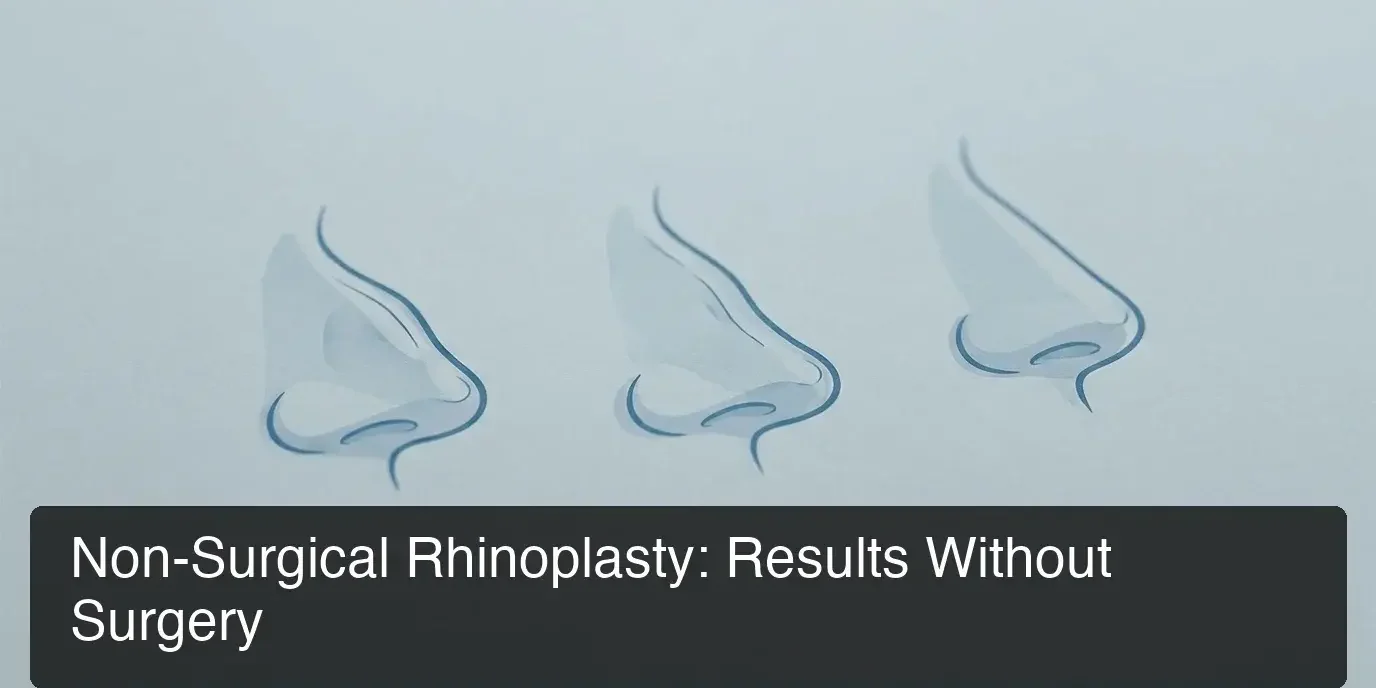
Non Surgical Rhinoplasty: Cost, Recovery Timeline, and How Long Results Last
Non surgical rhinoplasty reshapes the nose with dermal filler in around 15 to 30 minutes, at roughly a third of the cost of surgical rhinoplasty, with results visible immediately rather than settling over months. It smooths bumps, corrects asymmetry, and lifts a drooping tip. It cannot fix a deviated septum, reduce nose size, or resolve breathing problems — those still need surgery.
Key Takeaways
- Non surgical rhinoplasty uses dermal filler to reshape the nose without surgery, anaesthesia, or downtime — a lower-commitment option for patients still deciding on permanent correction.
- Results last 6–12 months and cost roughly £1,000–£3,000 in the UK, against £8,000–£15,000+ for surgical rhinoplasty — a fraction of the price, for a fraction of the time.
- It cannot correct a deviated septum, reduce nose size, or resolve breathing problems — filler only adjusts external shape and symmetry.
- Recovery is near-immediate: mild redness or swelling resolves within 24–48 hours, against 10–14 days off work and 3–6 months of full healing for surgical rhinoplasty.
- KCM Clinic offers both non-surgical and surgical rhinoplasty, so patients can trial a filler-based result before committing to permanent surgical correction.
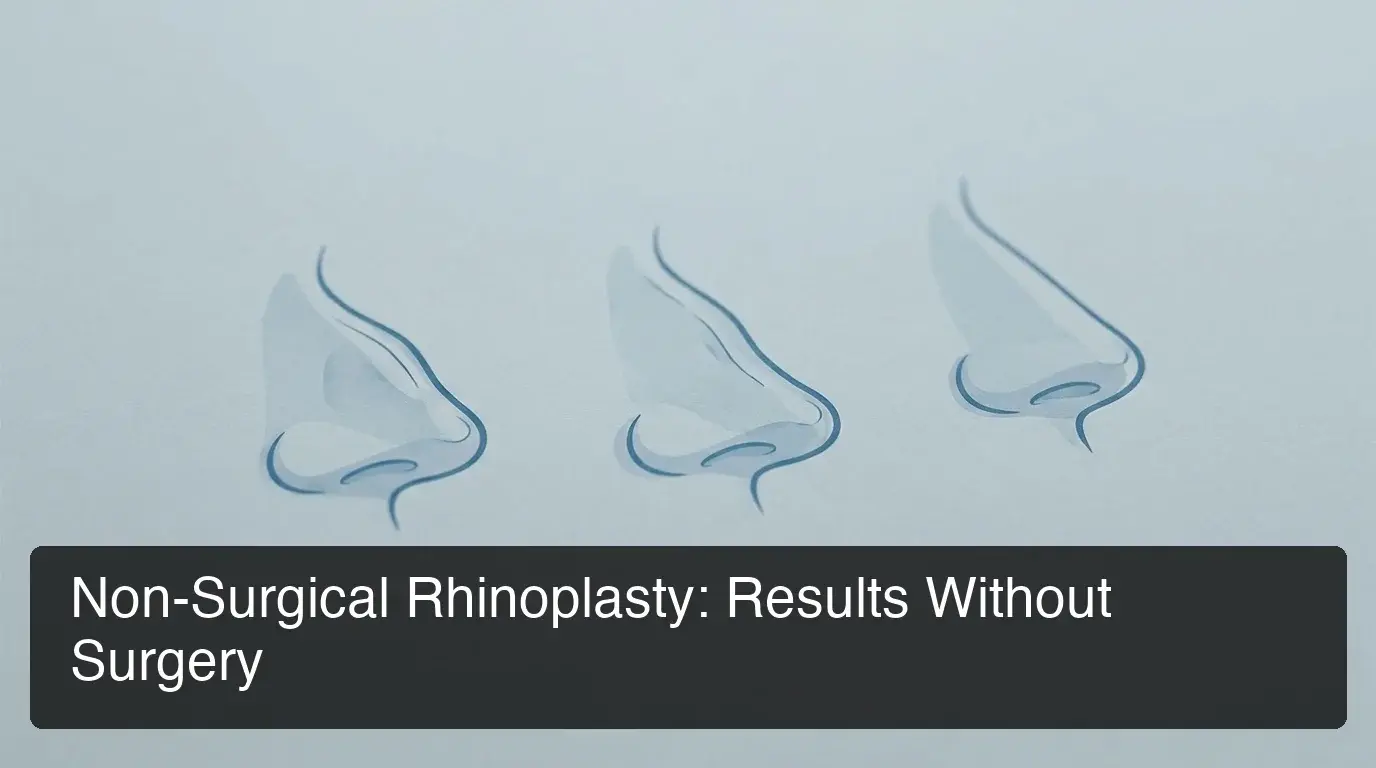
What Is Non Surgical Rhinoplasty and How Does It Work?
Non surgical rhinoplasty uses injectable dermal filler to smooth bumps, add symmetry, or lift a drooping tip without cutting, anaesthesia, or downtime. A practitioner injects small amounts directly under the skin, building up the treated area until the profile looks straighter or more balanced.
It’s also known as liquid rhinoplasty, a non-invasive rhinoplasty, a dermal filler nose job, or a temporary nose job — different names for the same injectable technique, chosen by clinics and patients depending on which feature they’re emphasising.
The technique works by addition, not subtraction. Filler can camouflage a dorsal bump by raising the area in front of and behind it, correct minor asymmetry, or fill a post-surgical dip. It cannot remove tissue, so a nose that’s too large or too wide cannot be made smaller this way.
This is also where terminology gets muddled. Cosmetic nasal reshaping and reconstructive rhinoplasty sit in genuinely different categories of medicine — one is an outpatient injectable, the other a surgical procedure under general anaesthesia. Patients researching non-invasive alternatives are usually evaluating the injectable route specifically, not a scaled-down version of surgery.
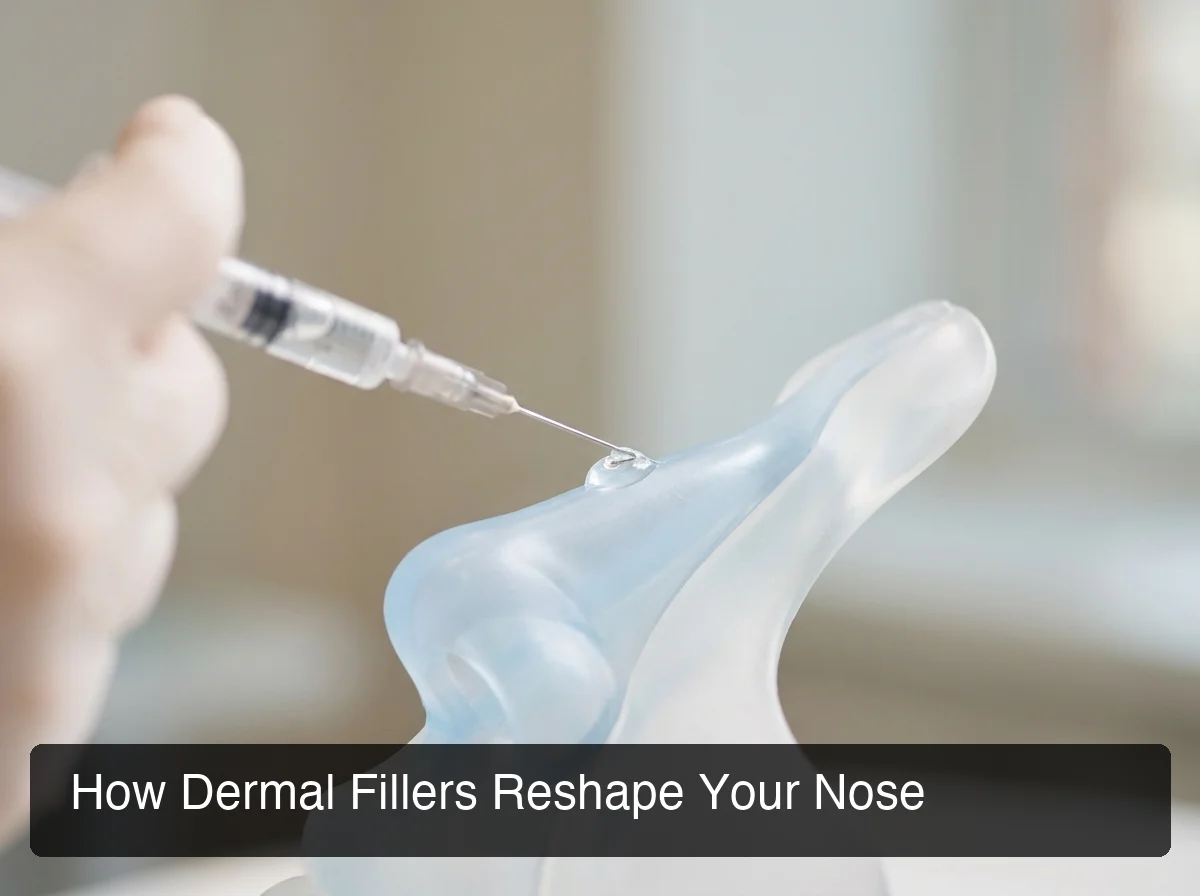
Worth knowing: A single syringe of filler (around 1ml) is usually enough for the entire procedure — most non-surgical nose jobs use less product than a full set of lip filler.
How Much Does Non Surgical Rhinoplasty Cost Compared to Surgical Rhinoplasty?
Non surgical rhinoplasty in the UK typically costs £1,000–£3,000 per session, depending on the amount of filler and the clinic. Surgical rhinoplasty costs £8,000–£15,000 or more once anaesthesia, hospital stay, and aftercare are included — a five-to-tenfold difference for a temporary rather than permanent result.
The gap looks larger than it is once it’s annualised. A single non-surgical session lasting a year works out cheaper per year of correction than surgery — until a patient wants the result to last beyond two or three touch-ups, at which point the ongoing cost overtakes a one-off surgical price.
| Non-Surgical Rhinoplasty | Surgical Rhinoplasty | |
|---|---|---|
| Typical UK cost | £1,000–£3,000 | £8,000–£15,000+ |
| Procedure time | 15–30 minutes | 1.5–3 hours |
| Anaesthesia | Topical numbing cream | General anaesthesia |
| Downtime | None to 48 hours | 10–14 days off work |
| Results visible | Immediately | 3–6 months to fully settle |
| How long it lasts | 6–12 months | Permanent |
| Reversible | Yes — dissolvable | No |
By the numbers: A non-surgical touch-up every nine months for five years costs roughly the same as one surgical rhinoplasty at the lower end of the UK private range.
How Long Do Non-Surgical Rhinoplasty Results Actually Last?
Most hyaluronic acid fillers used for non-surgical rhinoplasty last 6 to 12 months before the body gradually metabolises them. The nose tends to hold filler slightly longer than looser-skinned areas like the lips, because the skin there is thinner and more tightly bound to the underlying cartilage.
Results don’t disappear overnight. Filler fades gradually, so touch-ups are usually scheduled before the effect fully wears off rather than after the nose has visibly reverted. Denser liquid filler options — calcium hydroxylapatite-based products in particular — tend to last toward the longer end of that range, but carry a higher risk of vascular complications in the nose specifically, which is why most UK and EU practitioners default to hyaluronic acid.
Reality check: Because hyaluronic acid filler is enzymatically reversible, an unhappy result can be dissolved within days — a safety margin surgical rhinoplasty simply doesn’t offer.
What’s the Real Recovery Time for Non-Surgical Rhinoplasty?
Recovery from non-surgical rhinoplasty is measured in hours, not weeks. Mild redness, swelling, or tenderness at injection sites typically resolves within 24–48 hours, and most patients return to work or social activities the same day. Bruising is the most common side effect and usually fades within a week.
Compare that to surgical rhinoplasty: 10–14 days away from work, a nasal splint for the first week, and 3–6 months before swelling fully resolves and the final shape settles. For patients who can’t take extended time off, or aren’t ready to commit to permanent surgery, that gap is often the deciding factor — one reason BBL surgery and other minimally invasive procedures sit in the same “trial before you commit” category patients research alongside rhinoplasty.
Can Non-Surgical Rhinoplasty Fix a Deviated Septum or Breathing Problems?
No. Non-surgical rhinoplasty only adjusts the external contour of the nose using filler placed under the skin — it does not touch the septum, turbinates, or any internal airway structure, so it cannot correct breathing problems. Patients with a genuinely deviated septum need surgical rhinoplasty or septoplasty to address the underlying cartilage and bone.
Filler can sometimes create the visual illusion of straightness by camouflaging an external asymmetry, which occasionally leads patients to assume a functional problem has also improved. It hasn’t. The internal structure is unchanged, and any breathing improvement noticed is coincidental rather than mechanical.
When Should You Choose Non-Surgical Over Surgical Rhinoplasty?
Non-surgical rhinoplasty suits patients who want to test a result before committing, have minor cosmetic concerns rather than structural ones, or aren’t ready for the recovery time and permanence of surgery. Surgical rhinoplasty is the right call for anyone with a genuine structural issue, a breathing problem, or a change large enough that filler physically can’t achieve it.
A practical way to decide:
- Choose non-surgical if: you want to soften a bump, fix minor asymmetry, or lift a drooping tip, and you’re comfortable repeating treatment every 6–12 months
- Choose non-surgical as a trial if: you’re considering surgery eventually but want to preview roughly how a straighter profile will look and feel
- Choose surgical if: you have a deviated septum, want your nose smaller or narrower, or want a permanent result without repeat appointments
- Choose surgical if: previous filler has left scar tissue or vascular concerns that make further injection risky
Because both procedures address the same anatomical area from opposite directions — addition versus subtraction — a consultation that can competently perform either is more useful than one that only offers one.
What to Expect at KCM: All-Inclusive Non-Surgical Rhinoplasty Packages
KCM Clinic’s non-surgical rhinoplasty package bundles the initial consultation, the procedure itself, a same-day or overnight hospital stay where clinically appropriate, and three to four follow-up appointments into a single price with no hidden fees. That structure is the opposite of the typical UK clinic model, where the consultation and procedure are quoted separately and aftercare isn’t included at all.
For patients weighing whether to fly abroad for a treatment this quick, the all-inclusive structure is the actual decision point — not the headline procedure price, which most UK clinics quote in isolation anyway. KCM operates under the same EU Medical Devices Regulation that governs cosmetic surgery across the EU, so filler products, sterility standards, and practitioner qualifications meet the same bar as a clinic in Germany or France.
What this means for you: A UK quote of “£1,200 for filler” rarely includes the consultation fee, a review appointment, or a dissolving session if something needs correcting — KCM’s price includes all of it upfront.
Patients who later decide they want surgical rhinoplasty in Poland already have KCM’s surgical team on file, so moving from a filler trial to permanent correction doesn’t mean starting the clinic search over.
Start Your Non-Surgical Rhinoplasty Consultation at KCM Clinic
Deciding between a temporary trial and a permanent correction is easier with a professional assessment of what your specific nose shape actually needs. KCM Clinic offers consultations for both non-surgical and surgical rhinoplasty, so you get a straight answer about which route fits your goals — not just the one a clinic happens to sell.
Book a rhinoplasty consultation at KCM Clinic
Frequently Asked Questions About Non-Surgical Rhinoplasty
Is non-surgical rhinoplasty worth it?
For minor bumps, asymmetry, or tip position, yes — it delivers visible correction with no downtime at a fraction of surgical cost. For structural issues like a deviated septum or a nose that needs to be smaller, it can’t deliver the result, so surgical rhinoplasty is the better investment.
What’s the difference between non-surgical and surgical rhinoplasty results?
Non-surgical results are additive, temporary, and reversible — filler smooths or lifts external contours for 6–12 months. Surgical results are structural and permanent, reshaping bone and cartilage directly, including changes filler cannot achieve, such as reducing nose size or correcting breathing function.
Can non-surgical rhinoplasty make my nose smaller?
No. Filler only adds volume, so it can straighten a profile or balance asymmetry, but it cannot reduce the size of the nose. Patients wanting a smaller or narrower nose need surgical rhinoplasty, which removes or reshapes bone and cartilage directly.
How soon can I see results after non-surgical rhinoplasty?
Results are visible immediately after injection, once any initial swelling settles — usually within 24–48 hours. Unlike surgical rhinoplasty, there’s no months-long wait for the final shape to emerge, since filler holds its placed position from day one.